
Nairobi Edition
Game Guide
How to play Mtaani.
A complete reference for rules, tiles, economy, and special events in the currently selected edition.

Back to the game
Quick Facts
- Objective: Be the last player standing after everyone else goes bankrupt.
- Players: 2 to 4, with humans, bots, or any mix of both.
- Starting cash: 2,000,000 SFR
- Payday salary: 400,000 SFR
- Board: 48 tiles on a 13 by 13 square loop.
- Bank reserves: 6,000,000 SFR
Overview
Mtaani is an urban property, finance, and negotiation strategy game where players build wealth by buying neighborhoods, trading assets, taking credit, and surviving both personal and global events.
The board is a 13 by 13 square loop with 48 tiles around the edge. Each edition changes names, art, and local flavor but uses the same Mtaani economy and rules.
The game runs in the browser with humans and bots at the same table. The guide below is generated directly from the game's data, so every number matches the build you are playing.
Flow of play
All players begin at Payday and roll two dice on their turn. Rolling doubles immediately grants another turn.
Each time you pass Payday you collect a salary. Landing exactly on Payday doubles that payment.
- Passing Payday pays 400,000 SFR; landing exactly there pays 800,000 SFR.
- A turn is one player's active move. Rolling doubles creates an immediate extra turn for that same player.
- A revolution is counted once every active player has passed Payday at least once.
- Turns and revolutions are the game's two clocks: turns drive jail time, while game revolutions — counted once every active player has passed Payday — drive bank-loan terms, player-loan terms, renovation timing, and effects shared by the whole table.
- A turn left idle can be ended by the table after 5 minutes so the game keeps moving.
Gameplay UI
The live game screen is board-first. Above the board you get the latest move feed and roll status so the whole table can see what just changed.
A right-hand rail keeps the current player card, player summaries, selected tile details, wiki shortcut, and event log preview visible while the bottom action dock opens turn actions, assets, trade, chat, audio, and lobby controls.
- Click a tile to inspect ownership, fees, unit upgrades, and mortgage state.
- Use the right rail to track turn order, cash pressure, and the latest events without leaving the board.
- Open the bottom dock panels when you need deeper workflows such as trading, chatting, checking the full log, or managing audio.
Lobbies and invites
Every lobby is private by default: it stays off other players' dashboards, and only the owner, seated players, and invited handles can see or join it. An owner who wants an open table has to deliberately make the lobby public.
A lobby's public-or-private setting is fixed once the game starts, so decide before you deal anyone in.
- Private lobby (the default): invite people by handle or share the lobby's invite link — only invited handles can find and join it. You can also invite spectators by handle to watch without taking a seat.
- Public lobby: turn on "Make this lobby public" when you create the lobby, or from its settings while it is still waiting. You are asked to confirm first, because anyone with the link can then join. A public lobby is reached through its link rather than listed on other players' dashboards.
- Visibility locks at kickoff: once the game starts you can no longer switch a lobby to public, and its invite tools drop away for public tables since anyone can already join by link.
Mtaani on mobile
Mtaani also runs as a mobile app that shares your account, lobbies, and saved games with the web version. Sign in with the same handle and you pick up exactly where you left off — the app and the browser talk to the same game, so a lobby you start on one shows up on the other.
The app is built around the same board, economy, and rules described throughout this guide; only the navigation is tuned for a phone. Games play in real time, refreshing the board as each turn resolves.
- Dashboard: your home screen lists your open lobbies, games you can watch, and saved games, plus a button to start a new game in your preferred edition.
- Create or join: spin up a lobby (pick the table size; it is private by default, or make it public so anyone can join by link), open a public table from its link, or accept an invite by handle.
- Fill the table: as the owner, add Base, Advanced, or Smart bots to any empty seat, then start once at least two players are seated.
- Play your turn: open the board of an active lobby to roll, buy, build, mortgage, trade, borrow, and handle jail — the same actions as the web dock, laid out for touch.
- Stay in sync: the board and event log refresh as turns resolve, so you can follow bot and opponent moves live or spectate a table you are not seated at.
- Saved games: reload any saved game from the dashboard to continue it in the app.
- Wiki and demo: open this guide from inside the app — its demo link launches a demo board in the app instead of the web page, so you can explore the rules on your phone.
- Tile detail: tap a tile once to preview it, then double-tap it to open the full detail card with owner, fees, mortgage value, and units.
- Two view modes: use the toggle in the top bar to switch between The Street — a scrollable carousel of tiles in board order — and the whole-board Map; your choice is remembered on that device.
- Zoom the board map: tap the minimap to zoom the whole board in and jump around, then tap its centre to zoom back out.
- Follow the turn: keep Follow turn on to hold the board on whoever is playing, or switch it off to look around the board yourself.
- Portrait or landscape: the board plays both ways. Held upright it stacks in a single column; turned sideways it splits, so the whole board fills the left of the screen at full height while the turn banner, players, and controls move to a panel on the right. Flipping upside down still works, and the lobby and menu screens stay portrait.
The bank and the money supply
The bank's cash lives in a shared ATM pool that starts at 6,000,000 SFR. Salaries, ATM windfalls, bank loans, and unit sale refunds are paid out of the pool, while taxes, purchase costs, building costs, bail, and other bank fees flow back into it.
Because the pool is finite, the bank can briefly run dry: if the pool cannot cover an ATM windfall you receive whatever is left.
- Landing on the ATM tile pays up to 750,000 SFR straight from the pool.
- Money paid between players never touches the pool; only payments to and from the bank change it.
Economy and fees
Landing on an unowned property lets you buy it outright or pay its fee to the bank. Owned properties charge visiting players as long as they are not mortgaged.
Fees grow dramatically with development, which makes a fully developed network the strongest income source in the game.
- A property's base fee is its purchase cost times its fee rate; owning the complete set doubles the fee while the set is unbuilt.
- Once units are built, the fee becomes (purchase cost + unit cost × units) × units ÷ 5, so a fully developed property charges its entire value plus all five units on every visit.
- Global events can temporarily raise, lower, or freeze fees, taxes, and property prices for the whole table.
Loans and mortgages
The game supports both bank loans and peer-to-peer loans, and you always take them out yourself: the bank never advances a loan to a human player automatically. Bank loans are drawn from the ATM pool, and both bank and player loans run on game revolutions — the term advances only once every active player has passed Payday, so lapping the board faster than the table never shortens what you owe.
Once the table as a whole has bought 10 properties, bank loans become variable: your limit grows by 10% of your net worth (recent average cash, minus debt, plus the value of unmortgaged properties).
- You choose how much to borrow from the bank, from 10,000 SFR up to your available limit — which starts at 350,000 SFR and can grow later — in 1,000 SFR steps, repaid with 10% interest after 3 game revolutions; only one bank loan can be open at a time.
- You can repay a bank loan in full or in part: pick any share of the balance from 20% up in 5% steps, or repay the most you can afford right now. Each payment clears accrued interest before principal, and the interest clock only restarts when you pay off more than half of what you owe.
- If a mandatory payment is larger than your cash, the game pauses your turn so you can raise the shortfall — borrow, mortgage, sell units, or trade — or declare bankruptcy; nothing is auto-borrowed on your behalf. Only bots borrow automatically, and only to keep the game moving.
- Player-to-player loans run on game revolutions in the same way, so the term advances only after the whole table has cycled through Payday.
- When a player-to-player loan reaches maturity, the borrower owes principal plus interest at the start of their next turn.
- Player loans can be repaid the same way — in full or a chosen slice (from 20% up in 5% steps, or the most you can afford) — with each payment clearing interest before principal.
- Lenders can demand early repayment, but doing so cancels all interest and leaves only the principal due.
- Mortgaging pays out a property's mortgage value instantly; unmortgaging costs the mortgage value plus 10% interest.
- Mortgaged properties charge no fees, and a property cannot be mortgaged while anything in its set has units; sell the units first.
- Batch mortgage and unmortgage actions always start from the most expensive eligible property.
Building and development
Completing a color set or company family unlocks double fees and unit construction. Estates build houses, while other families build routes, shops, satellites, or stations depending on the property type.
Development is the main way to turn a complete portfolio into game-winning income: every unit raises the fee sharply.
- You can only build on a complete, fully unmortgaged set, up to 5 units per property.
- Building must stay even: a property can only add a unit if it has the fewest units in its set, and selling must start from the most developed property.
- Units sell back to the bank at half their build cost.
- Batch build levels an entire set to a target number of units in one action, as far as funds allow.
Renovating properties
Renovation is a permanent, per-property upgrade: it raises a property's rent for the rest of the game. Unlike units, a renovation stays with the property even if it is later traded away.
When it is your turn and you are standing on a property you own that is eligible, a Renovate button appears next to Roll dice. Choosing it renovates instead of rolling.
- A property becomes renovatable once you have owned it for at least 3 game revolutions (a revolution passes once every active player has reached Payday).
- Each renovation costs cash — shown on the button in SFR — and uses your whole turn: you stay on the property and end the turn, exactly as a roll would.
- You can renovate up to 3 times before a mandatory break; after that you cannot renovate any property until 2 more game revolutions have passed, then the allowance resets. Your remaining renovations are shown on your player card.
- You can spread those renovations across different properties, and every property has a maximum rent it can reach; once a property is fully renovated its Renovate button no longer appears.
Cards you buy and hold
Some cards are bought rather than drawn, and they wait in the Purchased cards panel of the asset manager until you choose to use them. Insurance is always on sale there; the three special cards are bought only at their home tiles.
Every card in this panel can be traded between players like any other asset, and each returns to the shared pool once it is spent, ready to be bought again.
- Insurance cushions a mandatory payment. The first costs 1,000,000 SFR and the price doubles with each purchase; it is spent only when a player chooses to cover a payment they cannot otherwise settle in cash.
- The insurance cards available are one more than the number of players, and the maximum a player can hold is the same as the number of players. Using one is optional, and once used it returns to the shared pool.
Special cards
Four one-of-a-kind special cards are bought during play. Only one of each ever exists, each is bought once at a specific tile, and each returns to the pool the moment its effect is spent, so it can be bought again. They are held in the Purchased cards panel alongside insurance and can be traded like any other asset.
The Teleport and Zoning cards are on offer from the start of the game; the Injunction opens up from the 8th revolution and the Syndicate from the 15th.
- Teleport (2,000,000 SFR, offered when you land on a Mathree tile): once, jump from a property you own to another property you own. If the jump passes Payday you still collect your salary. It can only be played while you are standing on one of your own properties.
- Zoning (5,000,000 SFR, offered after the Municipal tile's usual flow): demolish every unit on one tileset, whoever owns it and with no compensation, then ban all construction on that set for 5 revolutions.
- Syndicate (9,000,000 SFR, offered when you land on a Mtaani tile from the 15th revolution): for 10 revolutions you skim 20% of the rent paid on every fast-food, transport, and comms business, taken from the owner's share rather than added to the payer's bill.
- Injunction (6,000,000 SFR, offered at the Municipal tile from the 8th revolution): shield one tileset you own for 7 revolutions. While shielded it cannot be Zoned, and Syndicate cannot divert its rent. Play it before a hostile action — it does not undo effects already in place.
Jail
Landing on the Jail tile in the normal course of play is still just a visit.
While jailed, you can still trade, borrow, lend, collect fees, and develop your complete portfolios, which keeps jail a strategic slowdown rather than a dead stop.
- Ways to go to jail: draw either of the two Mathree cards that send you to Jail, or get hit by the global lockdown event that sends every active player to jail.
- Trespassing: landing on an owned property on the rich side of the board carries a 10% chance of arrest, applied after the rent is paid. An arrest jails you for a random 2 to 5 turns.
- Rich landlords are exempt: own a complete hood (a full residential set) on the rich side and you are a local who can never be arrested for trespassing there. A single tile or an unfinished set is not enough, and only residential sets count — a completed transport, utility, comms, or fast-food set does not.
- Exception: the Mathree card about rushing to the county jail to bail out your friend is only movement to the Jail tile, so it counts as just visiting.
- Wait it out: the sentence ticks down one turn at a time, and rolling doubles releases you immediately.
- Pay 20,000 SFR bail to walk free.
- Bribe the guards for 50,000 SFR: the odds drift minute to minute between roughly 20% and 80%, and the guards' mood hints at your chances.
- A failed bribe costs a further 100,000 SFR fine and extends the sentence to 4 turns; a successful one releases you onto a random Mathree tile and ends your turn.
The seedy side
The low-rent side of the board is rough. Landing anywhere there risks a mugging that costs you some cash on the spot.
- Mugging: landing on the seedy side carries a 10% chance of being mugged, the same odds as a trespass arrest on the rich side.
- A mugging costs a random 5% to 15% of your cash, rounded to the nearest 1,000 SFR.
- Locals are safe: own a complete hood (a full residential set) on the seedy side and you are never mugged there. A single tile or an unfinished set is not enough, and only residential sets count. Players holding less than 100,000 SFR are also left alone.
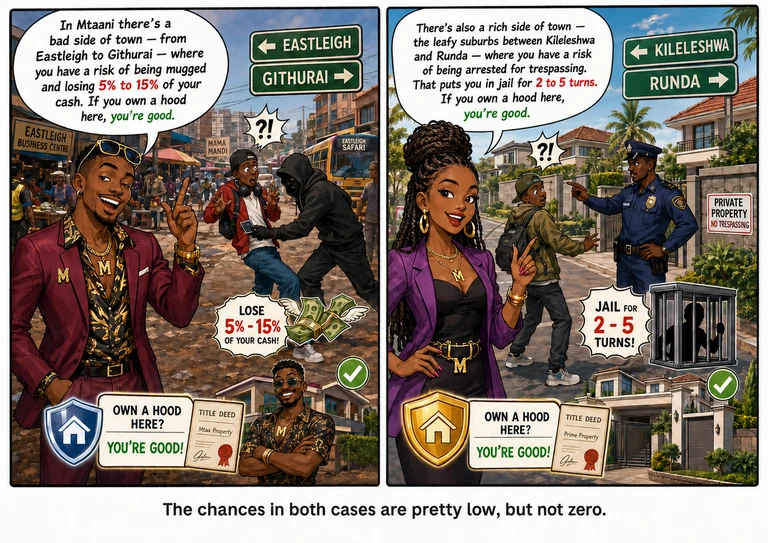 The neighborhoods bite back: get arrested for trespassing on the rich side, or mugged on the seedy side. Own a complete hood in either place and the locals leave you be. |
Trading and the no-trade rule
Trades can combine cash, properties, insurance, and special cards in the same offer, and both sides see exactly what changes hands before accepting.
Trading is not optional forever. The game punishes gridlock: complete portfolios are the engine of the endgame, and the rules push the table toward making deals.
- You can mark yourself open or closed to trade offers at any time.
- If no player holds a complete portfolio and ownership is so scattered that no set can be completed without a trade, every player pays a 200,000 SFR no-trade charge at each revolution until a complete portfolio appears. Its printed value climbs with the late-game scaling described below.
- Every completed trade earns both parties a trade point. Every 5th revolution a Chamber of Commerce official visits and each active player either spends one banked trade point or pays the same 200,000 SFR no-trade charge. It climbs with the same late-game scaling as the large Mtaani cards (150% at revolution 20, 175% at 30, and so on), so trading early banks a buffer against the steeper charges later.
Bots and solo play
Any seat can be filled by a bot, so you can practice solo or fill an uneven table. Bots take their turns automatically and follow the same rules as human players.
- Base bots play a straightforward game: they buy what they land on, mortgage to survive, accept portfolio-completing trades, and lend generously.
- Advanced bots play strategically: they build units, request loans, propose mutually beneficial portfolio trades, and are stricter lenders.
- Smart bots learn from completed games: they evaluate trades, builds, and loans with a model trained on real play instead of fixed rules.
Fortune
Landing on Fortune lets you choose which deck to draw from: a Mtaani card, which creates a positive or negative financial effect, or a Mathree card, which moves you to another tile.
Bankruptcy and winning
Mathree cards move players to other tiles, while Mtaani cards create positive or negative financial effects. Global events can also temporarily change salary, rents, or other rules for everyone.
Players are eliminated when they can no longer cover what they owe. The winner is the last player still standing.
- A bankrupt player's properties lose their units and mortgages and return to the market unowned.
- If the fatal debt was owed to another player, that creditor receives the bankrupt player's cash plus the mortgage value of their unmortgaged properties and half the build cost of their units.
Account management
Your account is your player handle. You can optionally protect it with a password and add an email address, which is used only to send you a password-reset link and nothing else. An unprotected handle can be claimed by anyone, so add a password to any handle you want to keep.
Everything about your account lives on the Account page, reachable from the dashboard. There you can set, change, or remove your password, update the reset email, request a password-reset link, or permanently delete the account.
- Security: set or change your password, remove password protection, and set the email address used for resets.
- Delete account: the Danger zone permanently deletes your account. You must type your handle to confirm, and the action cannot be undone.
- What deletion erases: your email, password, saved games, chat messages, presence, pending invitations, and every active session, so you are signed out everywhere.
- What deletion keeps: completed-game history is retained for gameplay statistics and computer-player training, but your handle is replaced everywhere it appears (in finished and ongoing games) with a random anonymous name, so those records no longer identify you.
Privacy and GDPR
Deleting your account is how you exercise your right to erasure. Email and password are the only personal data the game stores about you, and both are removed in full; providing an email is optional in the first place, keeping data collection to a minimum.
Rather than hard-deleting the row, deletion anonymises you in place: your handle is replaced with a fresh random name across every record, including shared game histories that other players and the training data depend on. This preserves those shared records while ensuring the retained statistics contain nothing that points back to you.
Because deletion is irreversible and immediate, it also revokes all of your sign-ins on the spot. If you only want to step away, remove the password and email instead of deleting, and your game history stays under your handle.
Special Tiles
 Payday Pass for 400,000 SFR. Land exactly here for 800,000 SFR. | 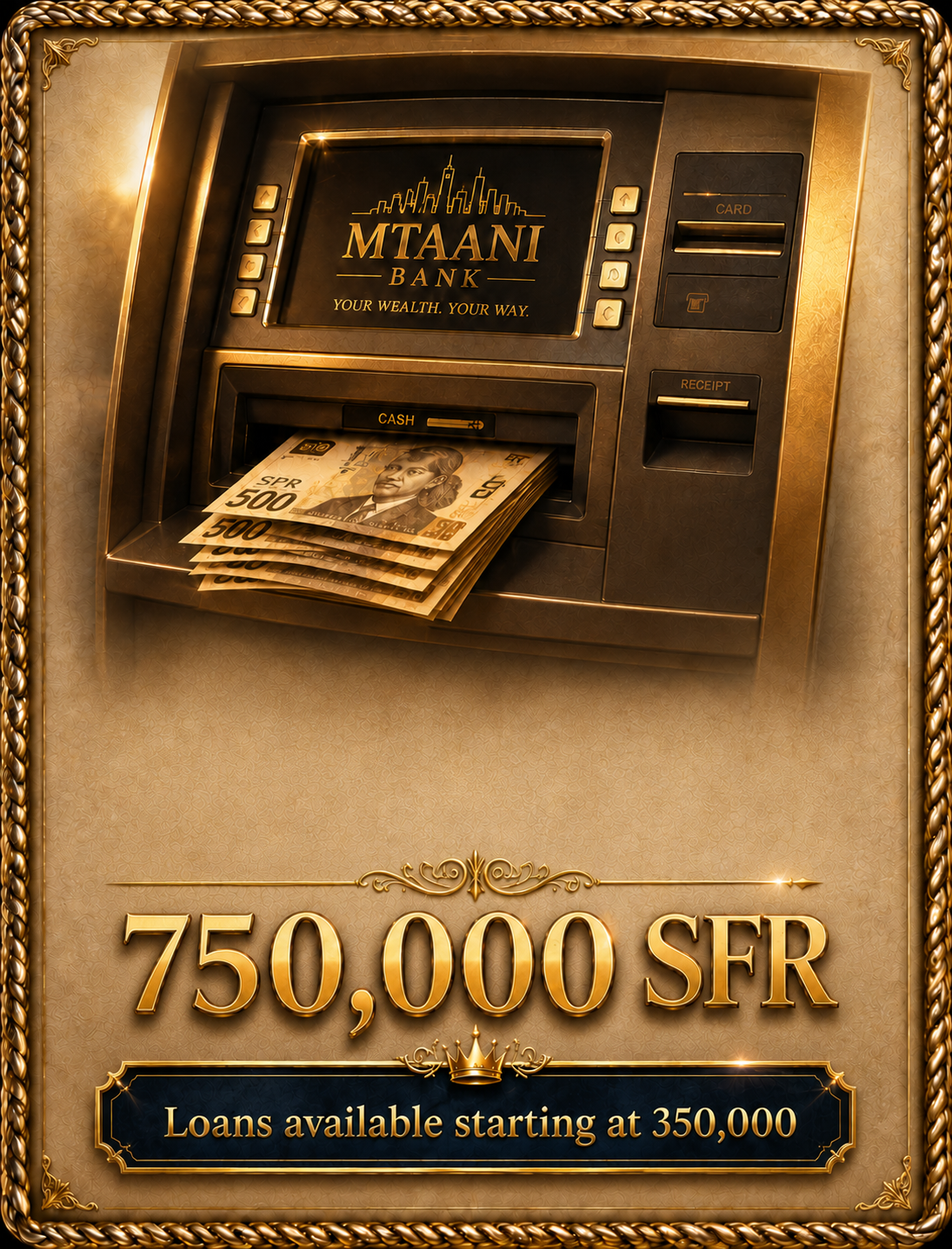 ATM Collect 750,000 SFR immediately when you land here. |  Fortune Choose whether to draw a Mtaani card or a Mathree card. |  Jail Landing here normally is safe; players sent here stay until they are released. |
 Mathree Draw a Mathree card that moves you to a specified tile. |  Mtaani Draw a Mtaani card with a positive or negative financial effect. |  PAYE Pay 35% of your cash balance. |  Municipal Choose one rule to double or halve salary, rent, Mtaani cards, dice rolls, property prices, or ATM amounts from enactment until the next revolution is completed. |
Municipal
Landing on Municipal lets you choose exactly one temporary rule for the whole table.
The rule can double or halve salary, rent, Mtaani cards, dice rolls, property prices, or ATM amounts.
Instead of scaling a value, the rule can ban all special card use, so no special card can be played until the rule expires.
The rule takes effect immediately when you set it and lasts until the next revolution is completed.
If a municipal rule is already active when you land here, nothing happens.
Property Guide
Estates
Neighborhood groups. Completing a set unlocks double rent and house building.
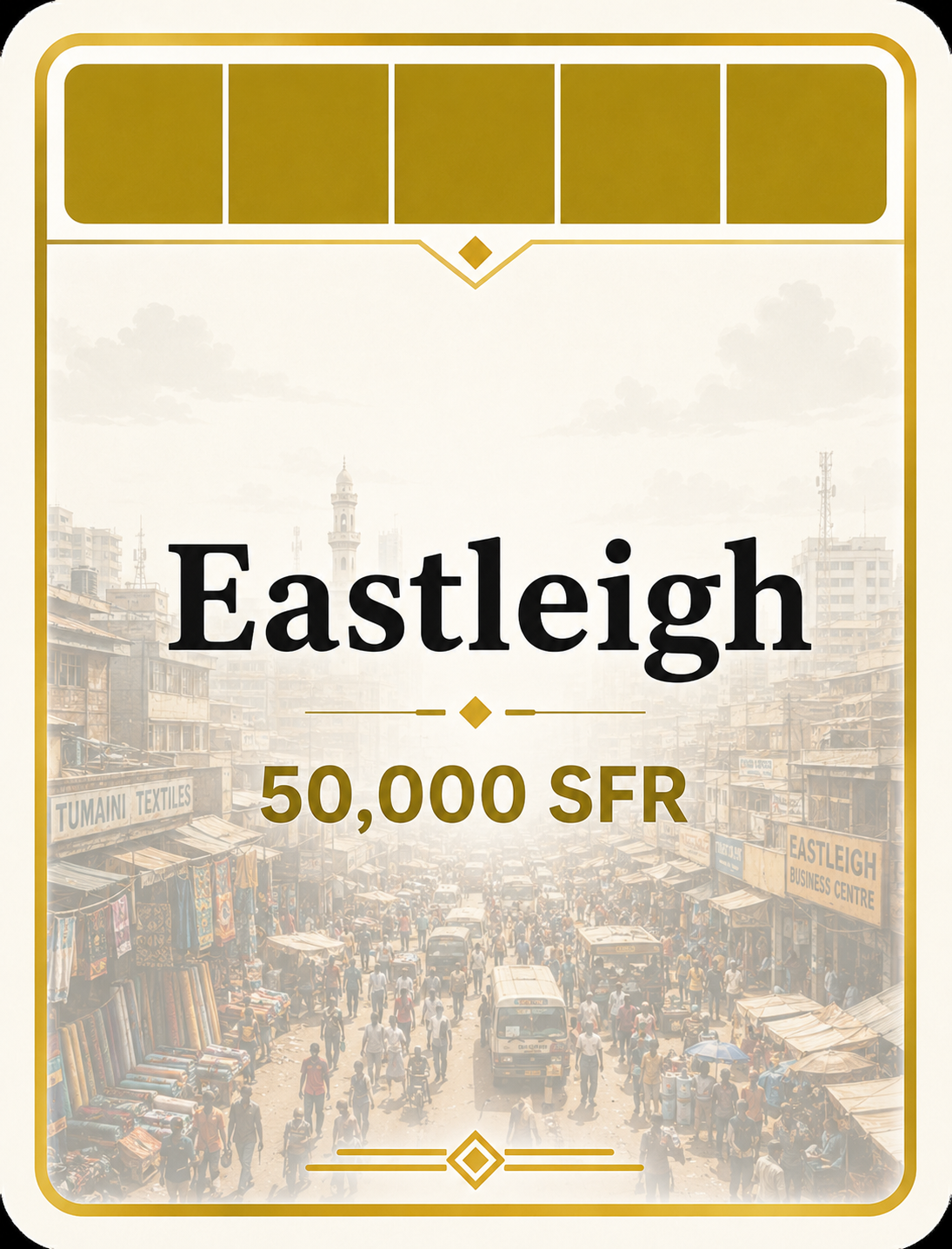 Eastleigh Base fee: 1,000 SFR Mortgage: 12,500 SFR Unit cost: 22,500 SFR | 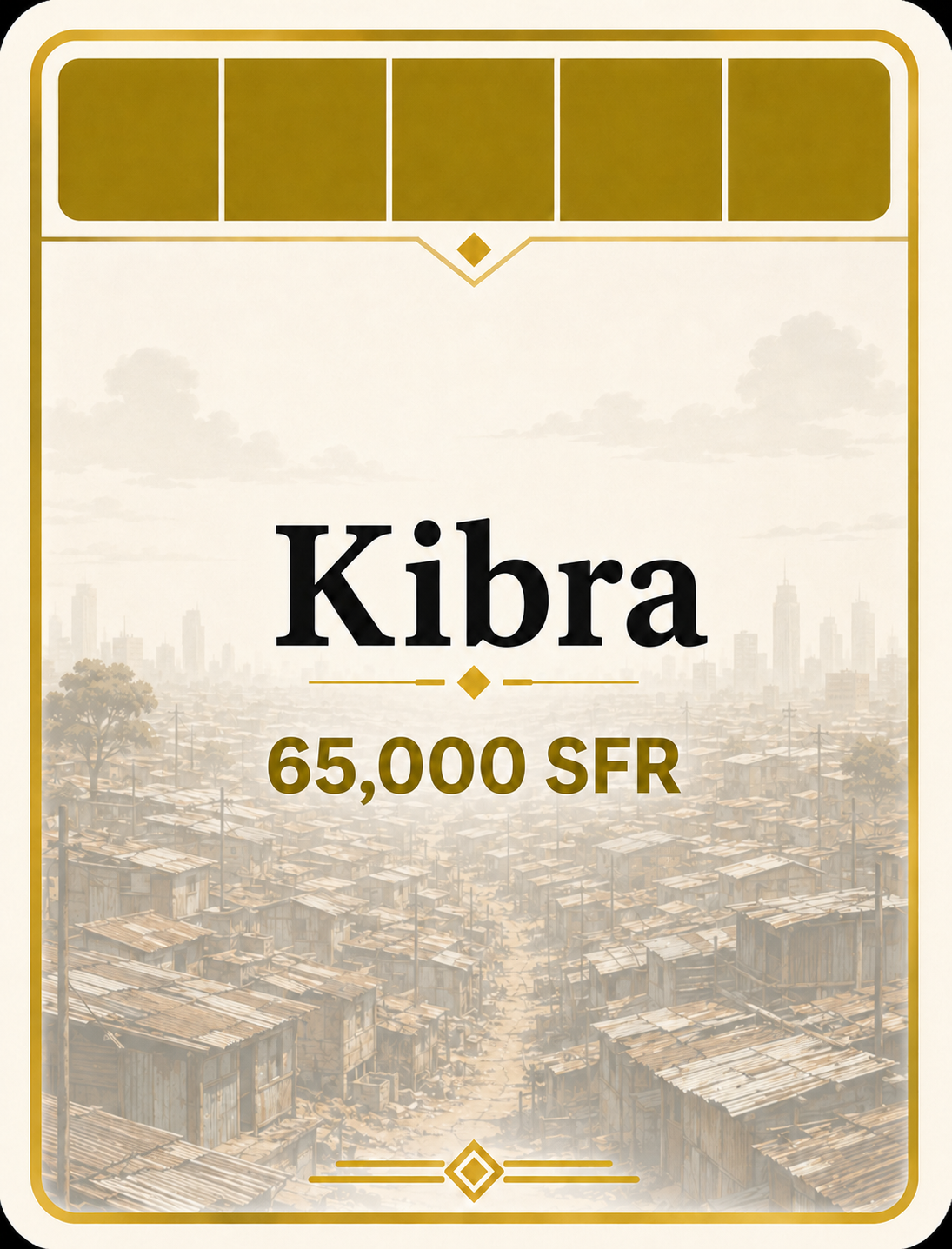 Kibra Base fee: 1,300 SFR Mortgage: 16,250 SFR Unit cost: 29,250 SFR | ||
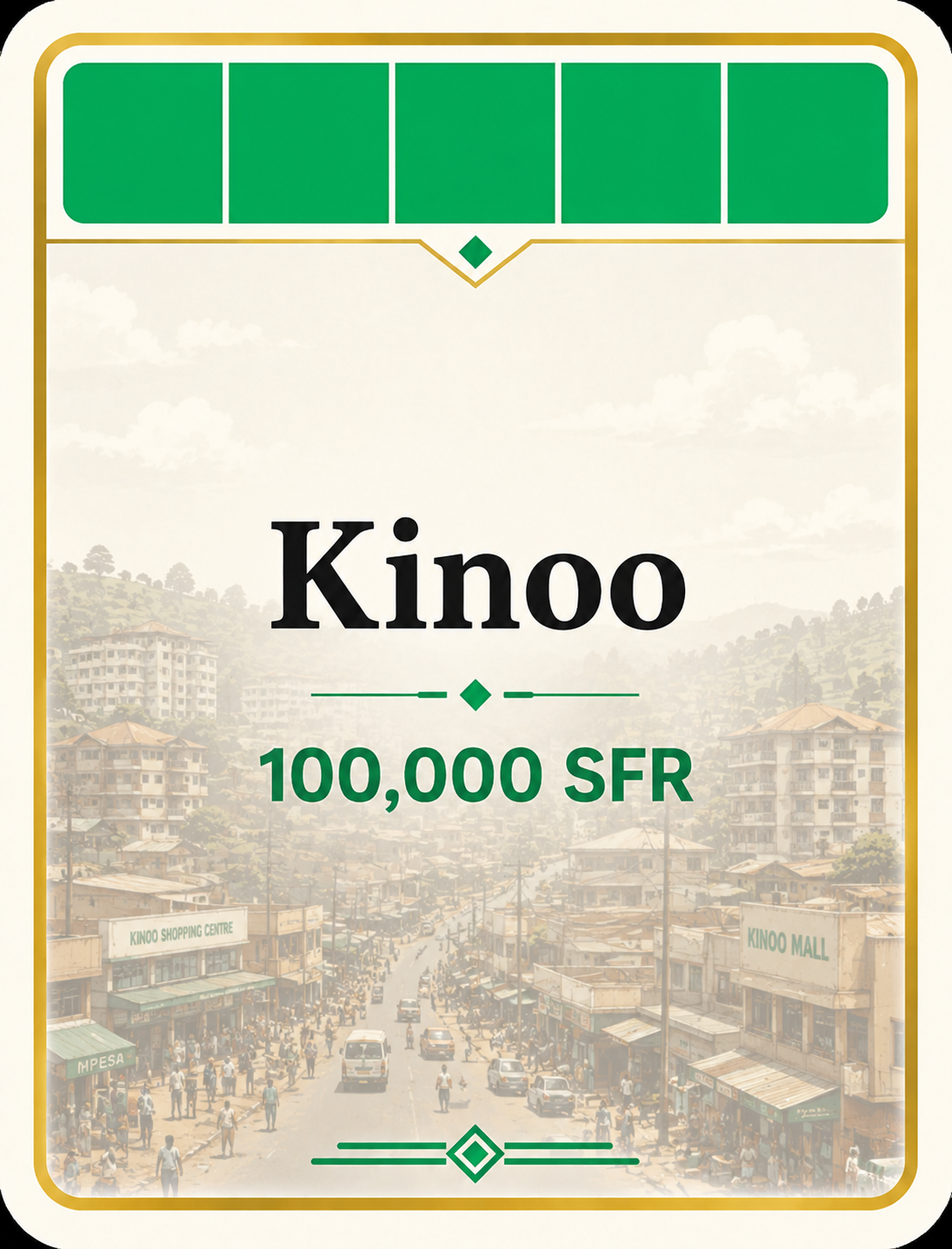 Kinoo Base fee: 3,000 SFR Mortgage: 30,000 SFR Unit cost: 50,000 SFR | 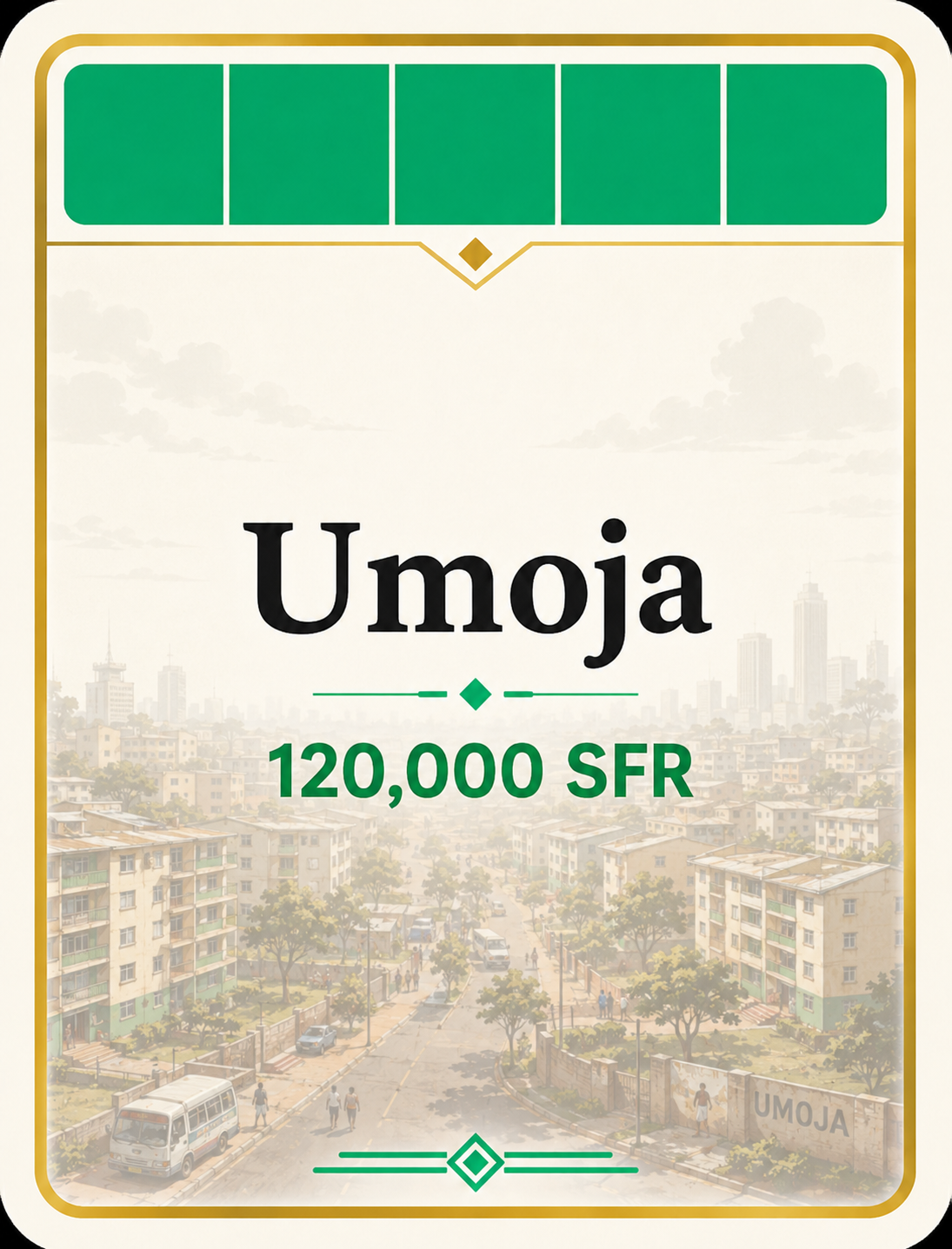 Umoja Base fee: 3,600 SFR Mortgage: 36,000 SFR Unit cost: 60,000 SFR | 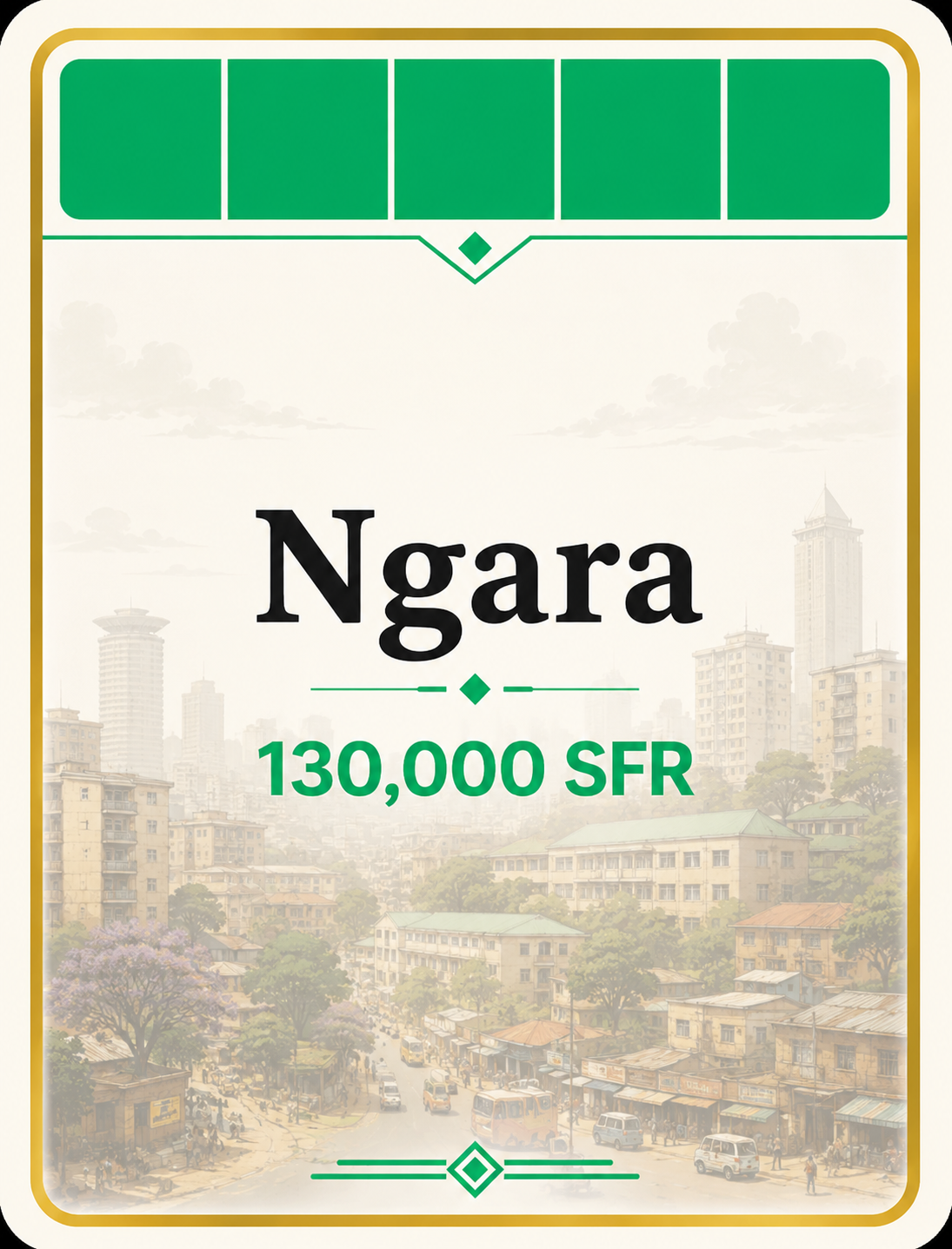 Ngara Base fee: 3,900 SFR Mortgage: 45,500 SFR Unit cost: 71,500 SFR | |
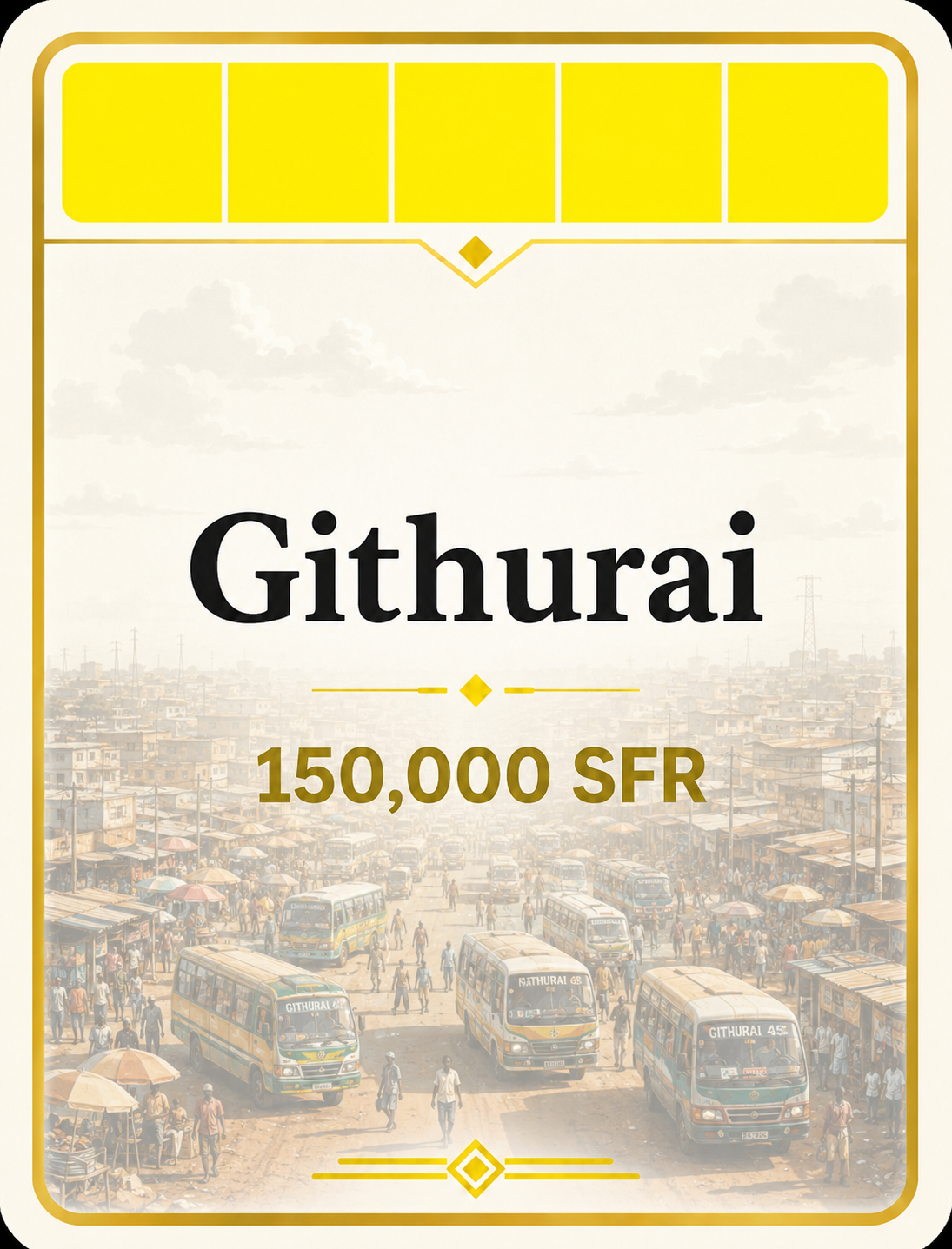 Githurai Base fee: 6,000 SFR Mortgage: 52,500 SFR Unit cost: 82,500 SFR | 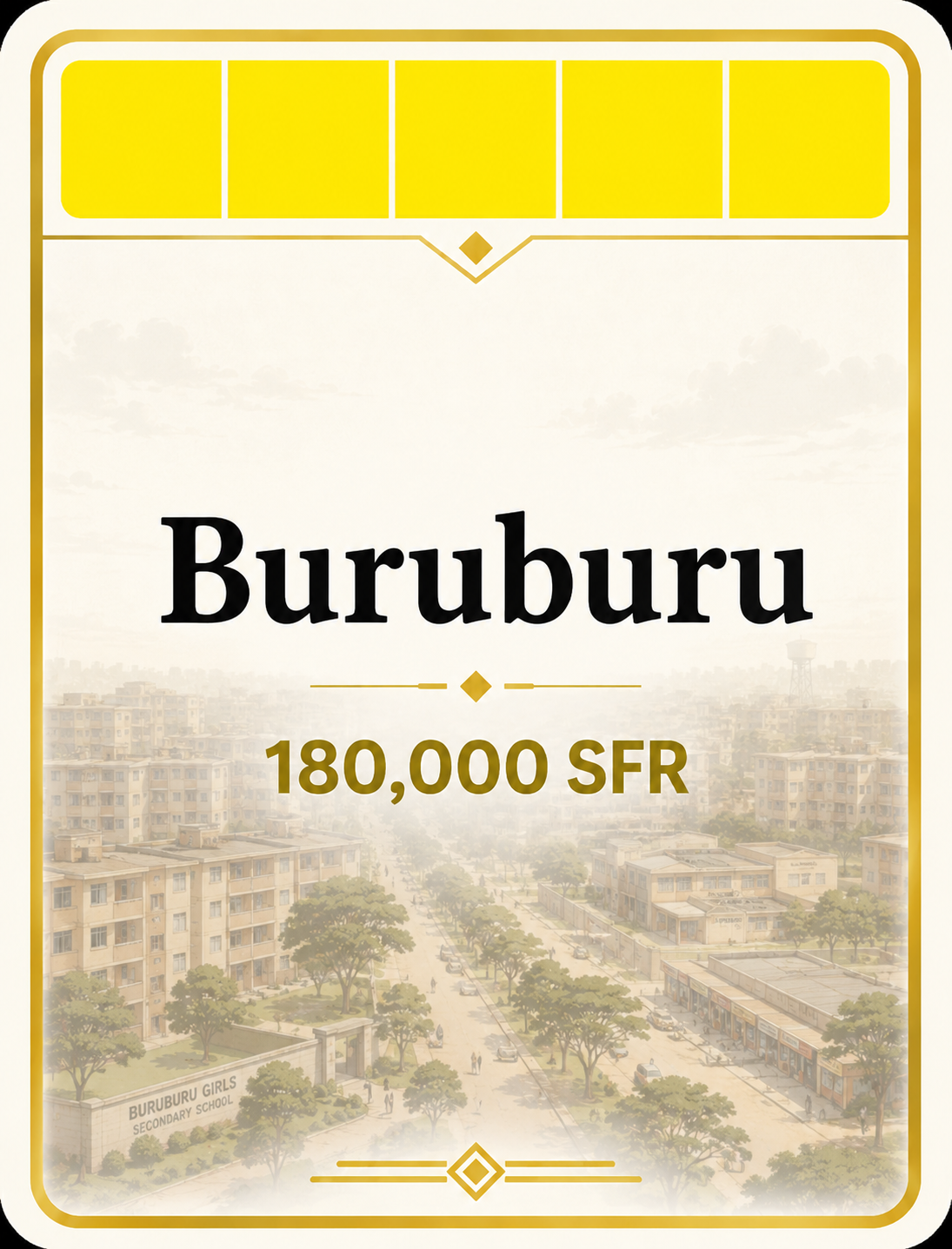 Buruburu Base fee: 7,200 SFR Mortgage: 62,999 SFR Unit cost: 99,000 SFR | 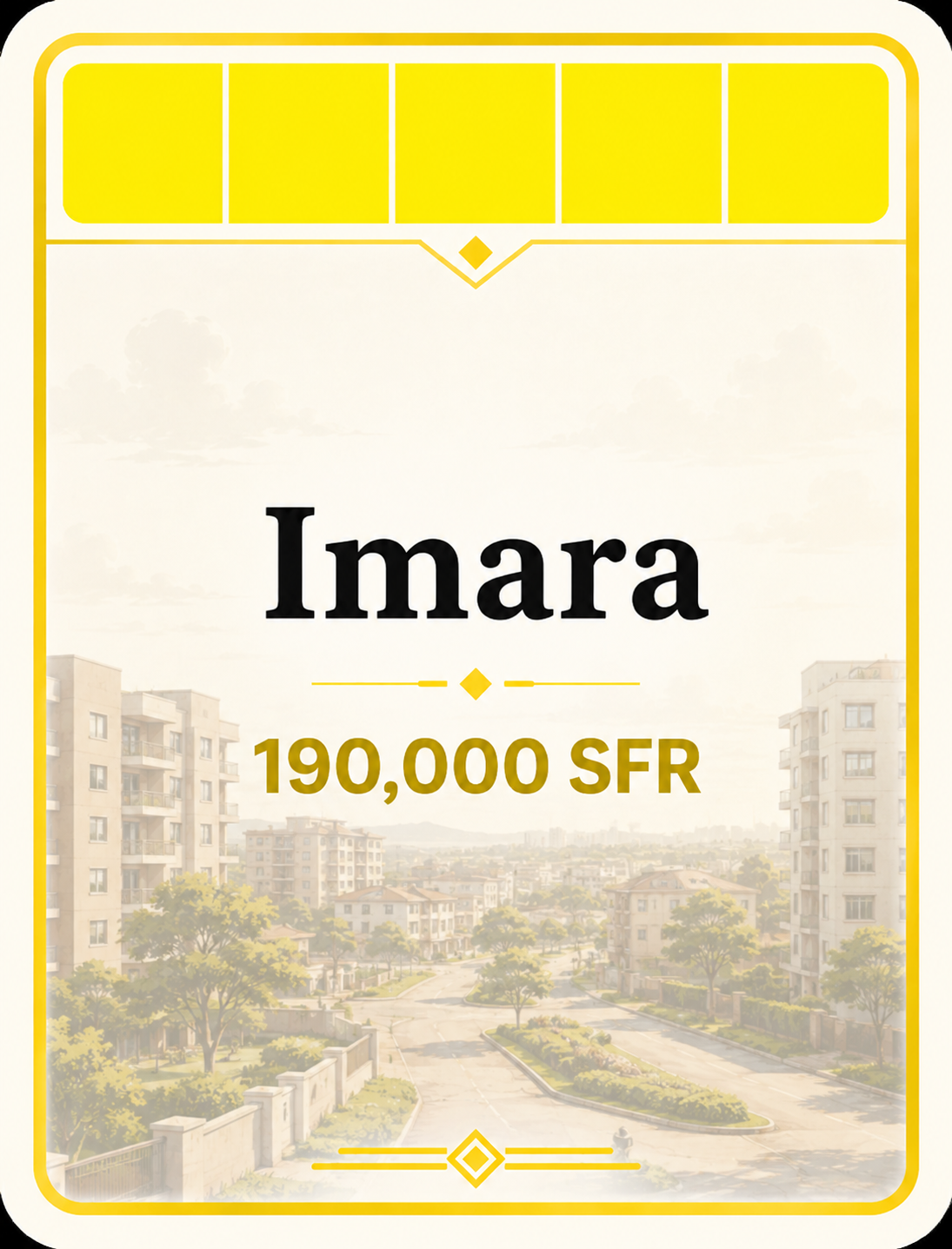 Imara Base fee: 7,600 SFR Mortgage: 66,500 SFR Unit cost: 104,500 SFR | |
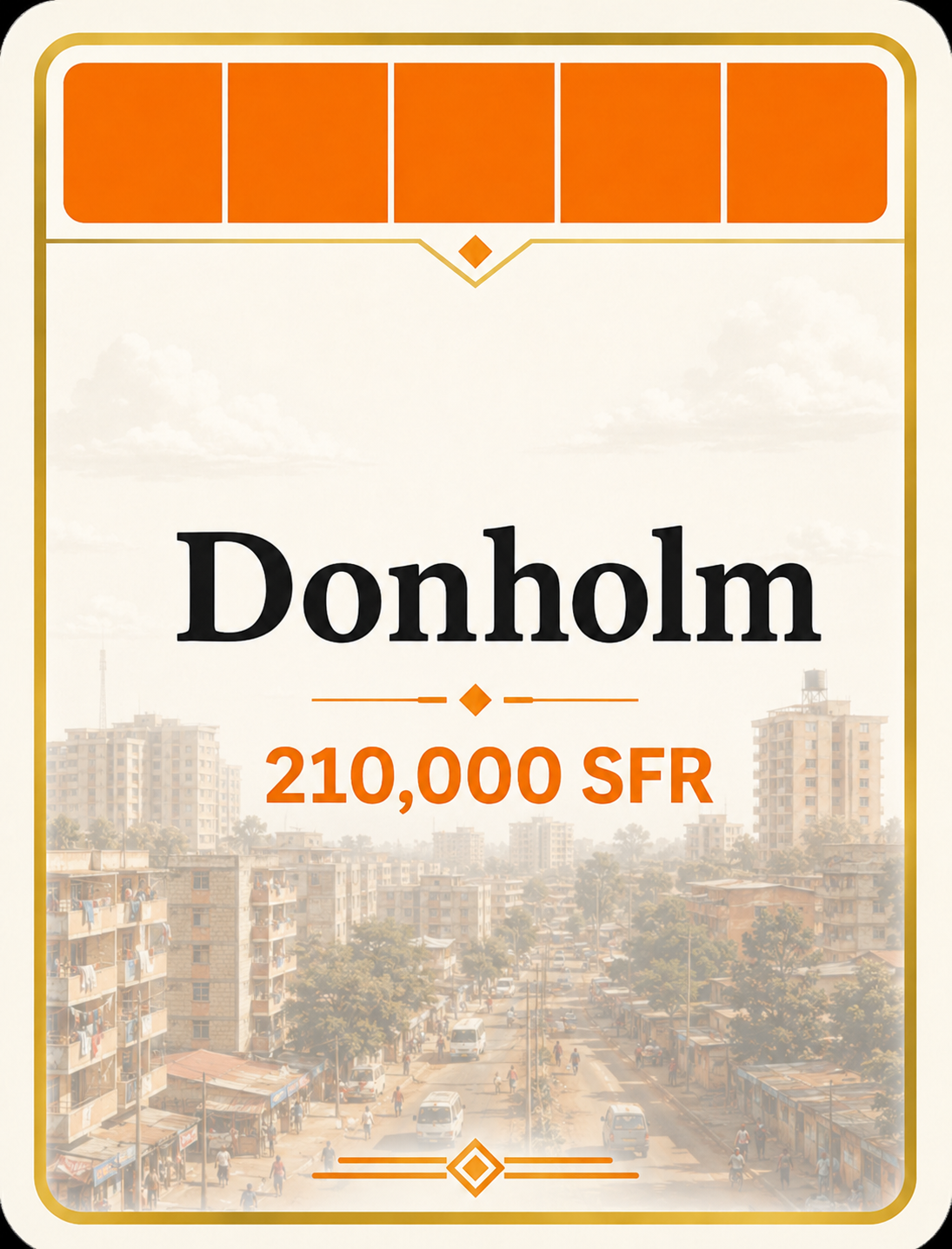 Donholm Base fee: 8,400 SFR Mortgage: 73,500 SFR Unit cost: 115,500 SFR | 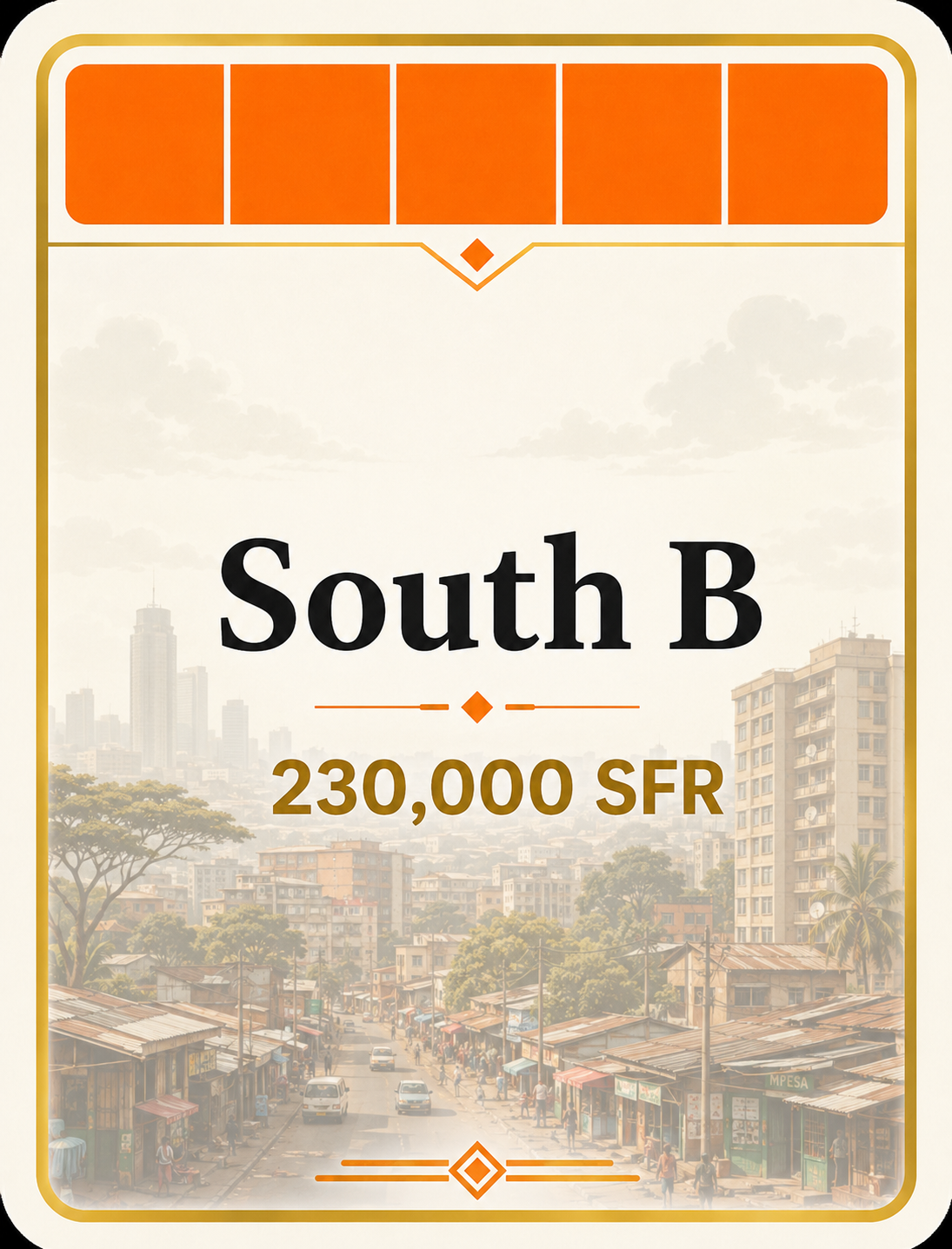 South B Base fee: 9,200 SFR Mortgage: 92,000 SFR Unit cost: 138,000 SFR | 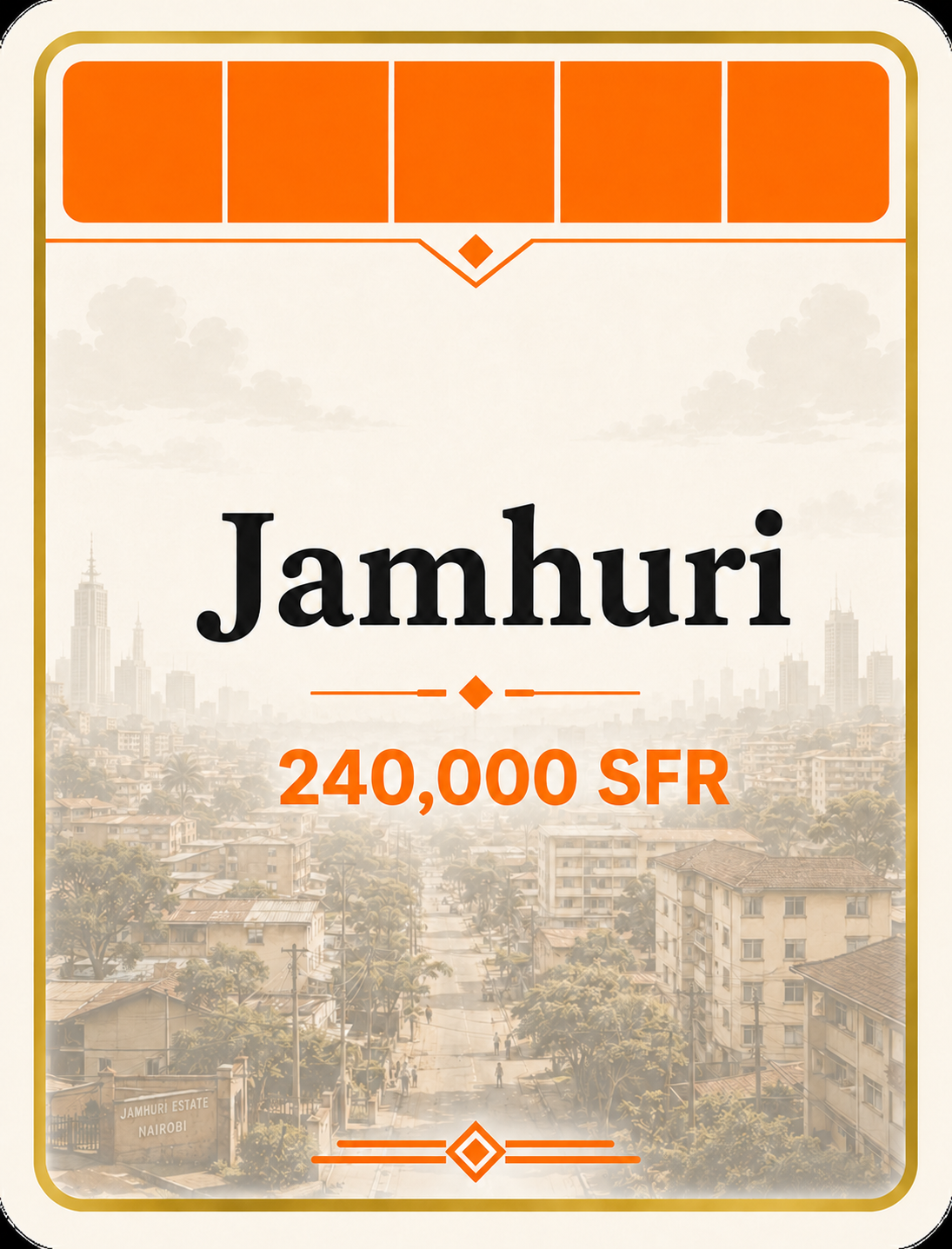 Jamhuri Base fee: 9,600 SFR Mortgage: 96,000 SFR Unit cost: 144,000 SFR | |
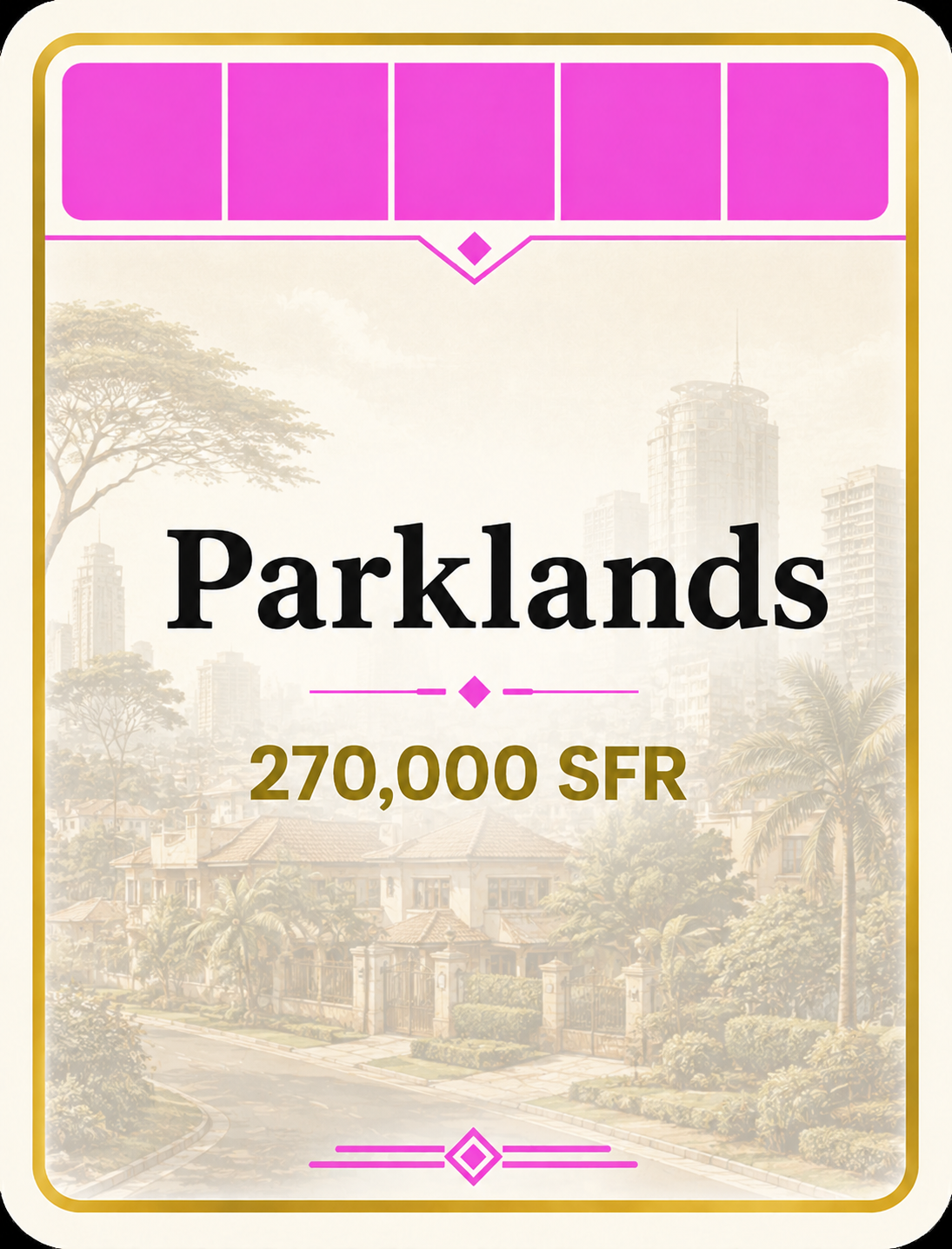 Parklands Base fee: 13,500 SFR Mortgage: 108,000 SFR Unit cost: 162,000 SFR | 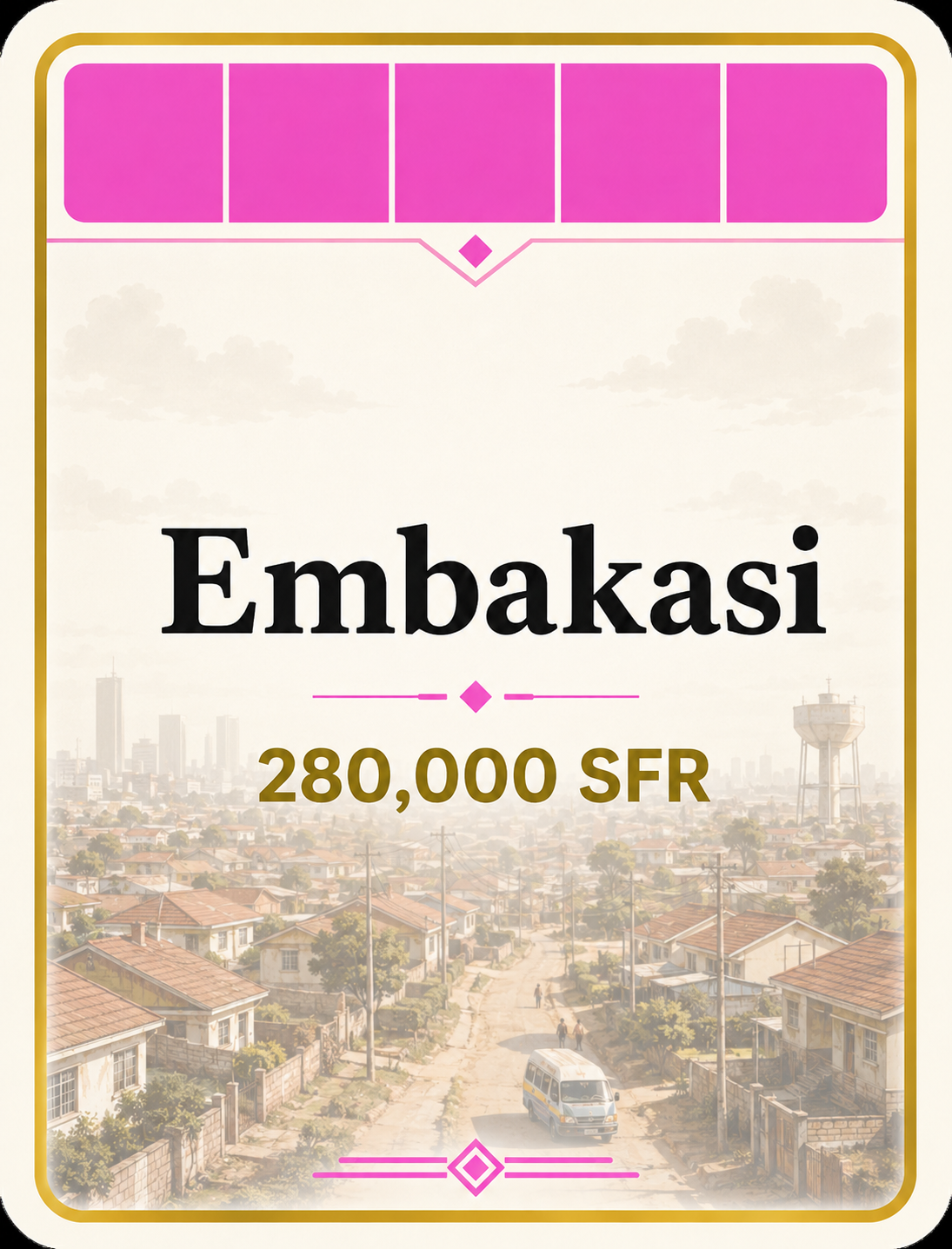 Embakasi Base fee: 14,000 SFR Mortgage: 112,000 SFR Unit cost: 168,000 SFR | 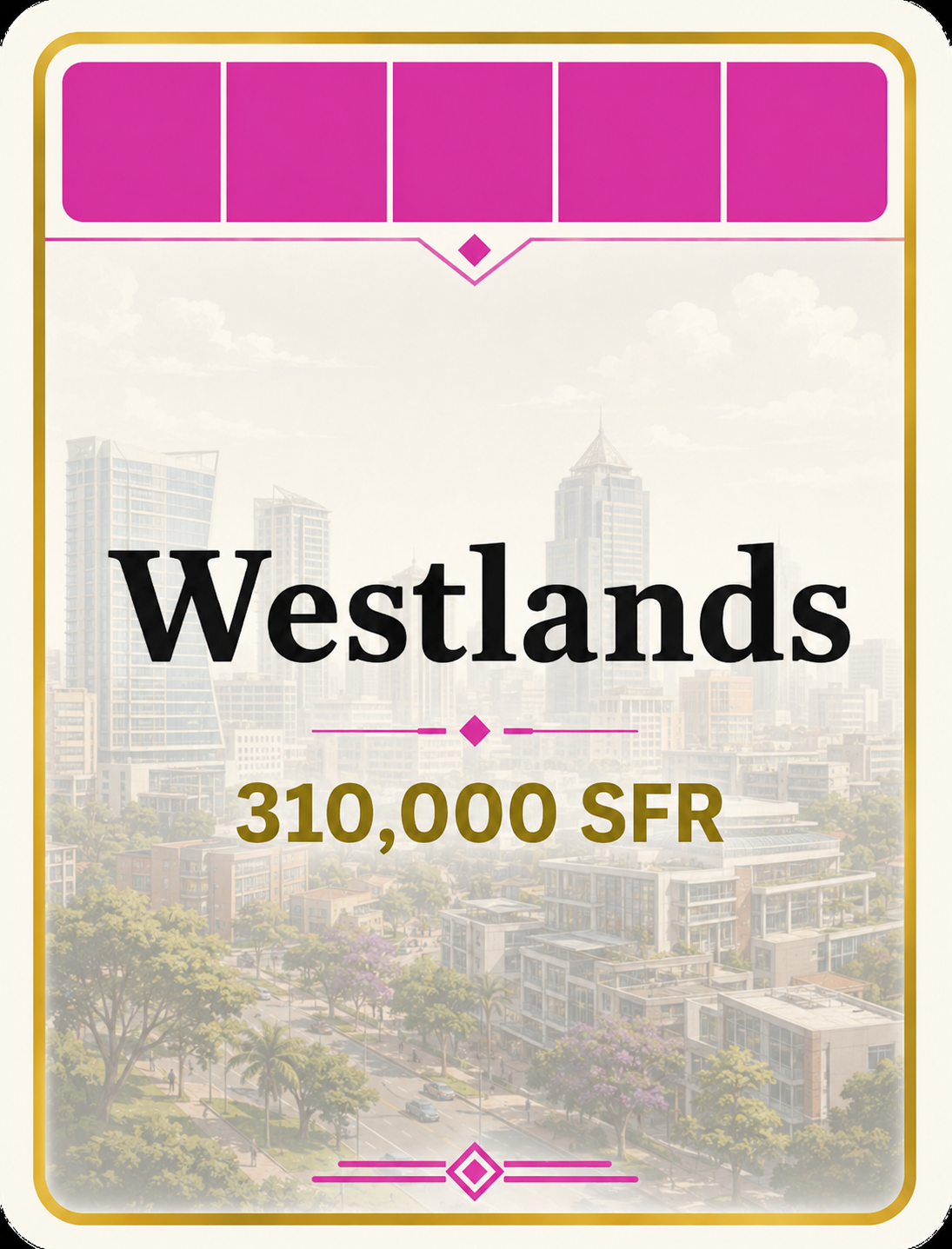 Westlands Base fee: 15,500 SFR Mortgage: 139,500 SFR Unit cost: 201,500 SFR | 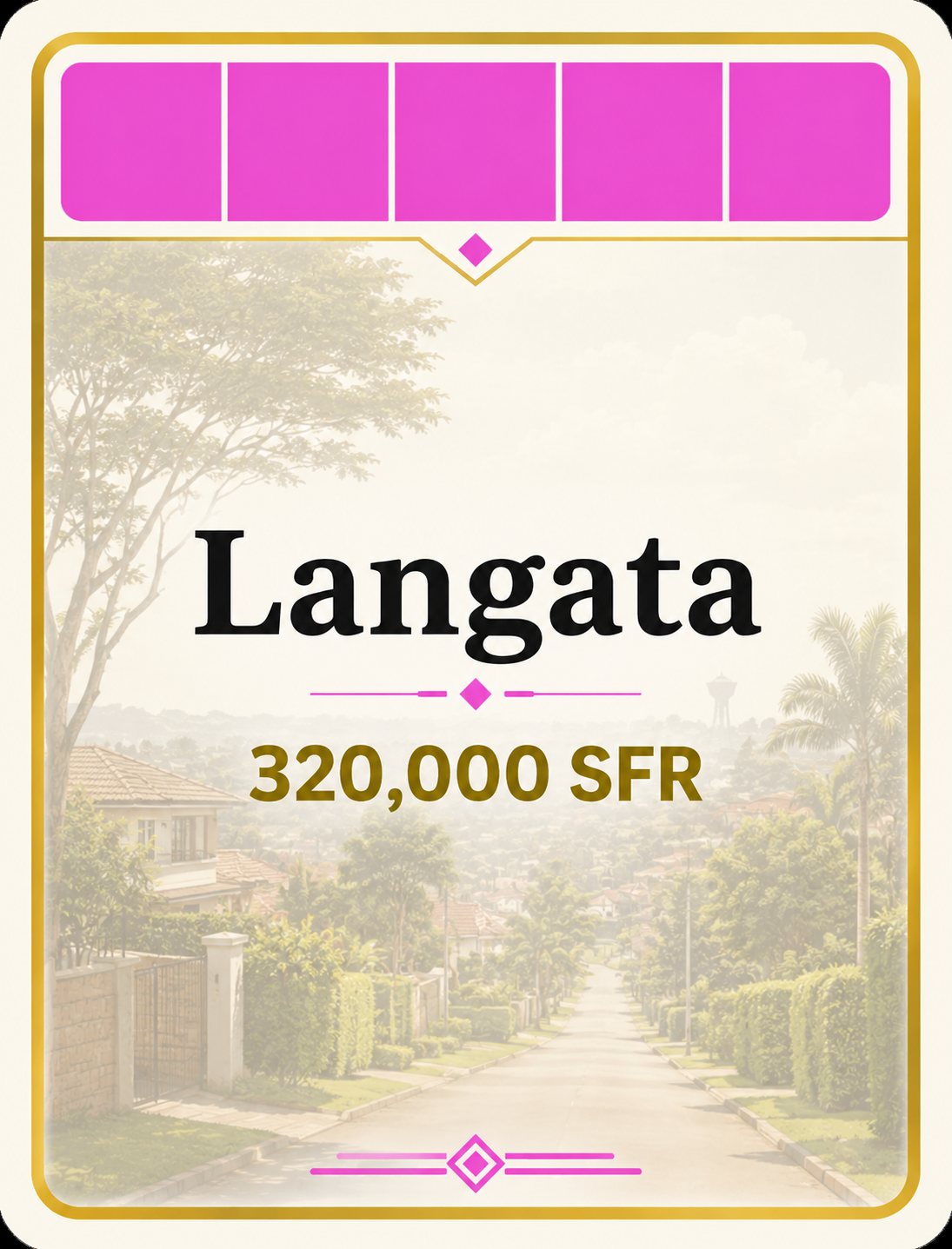 Langata Base fee: 16,000 SFR Mortgage: 144,000 SFR Unit cost: 208,000 SFR |
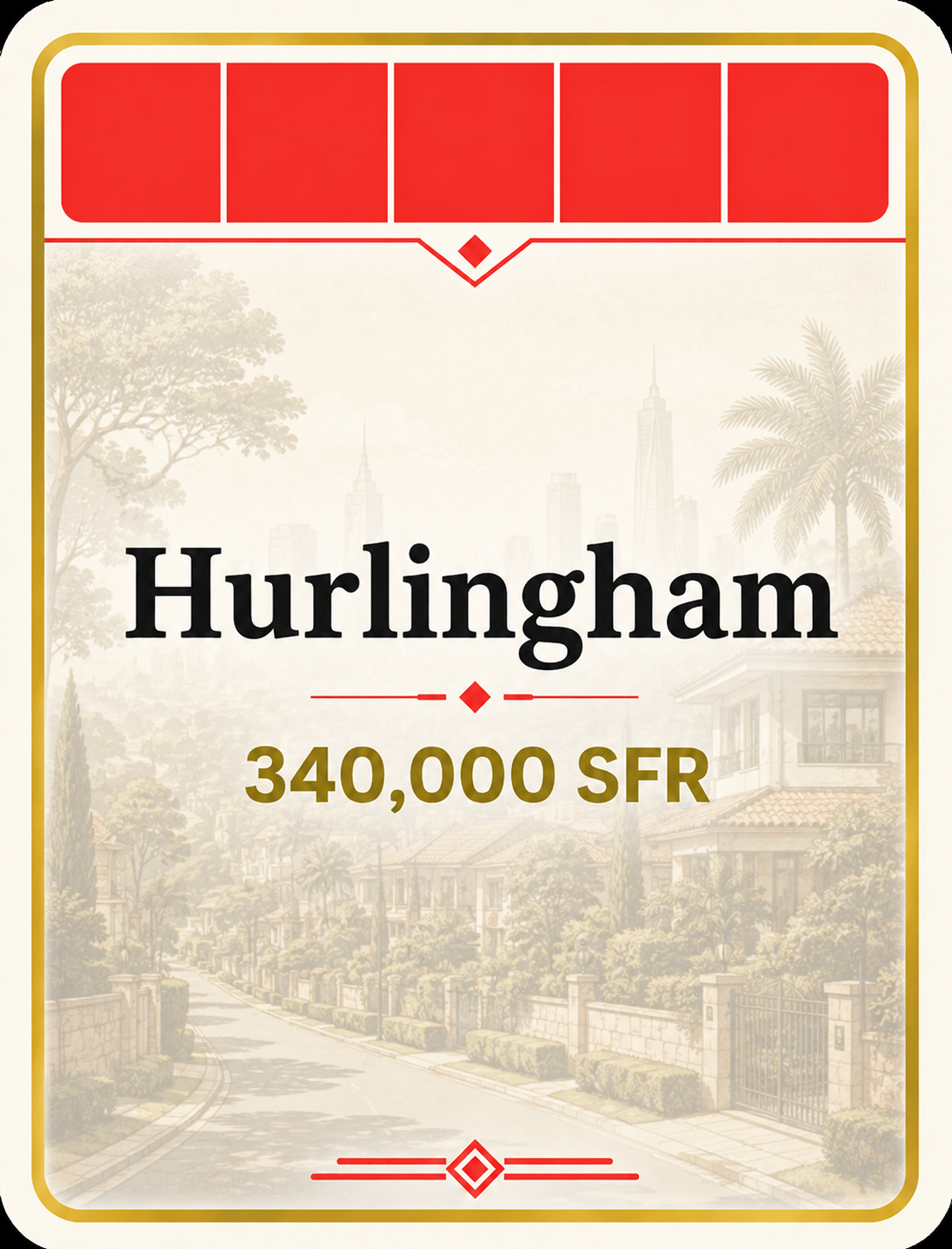 Hurlingham Base fee: 20,400 SFR Mortgage: 153,000 SFR Unit cost: 221,000 SFR | 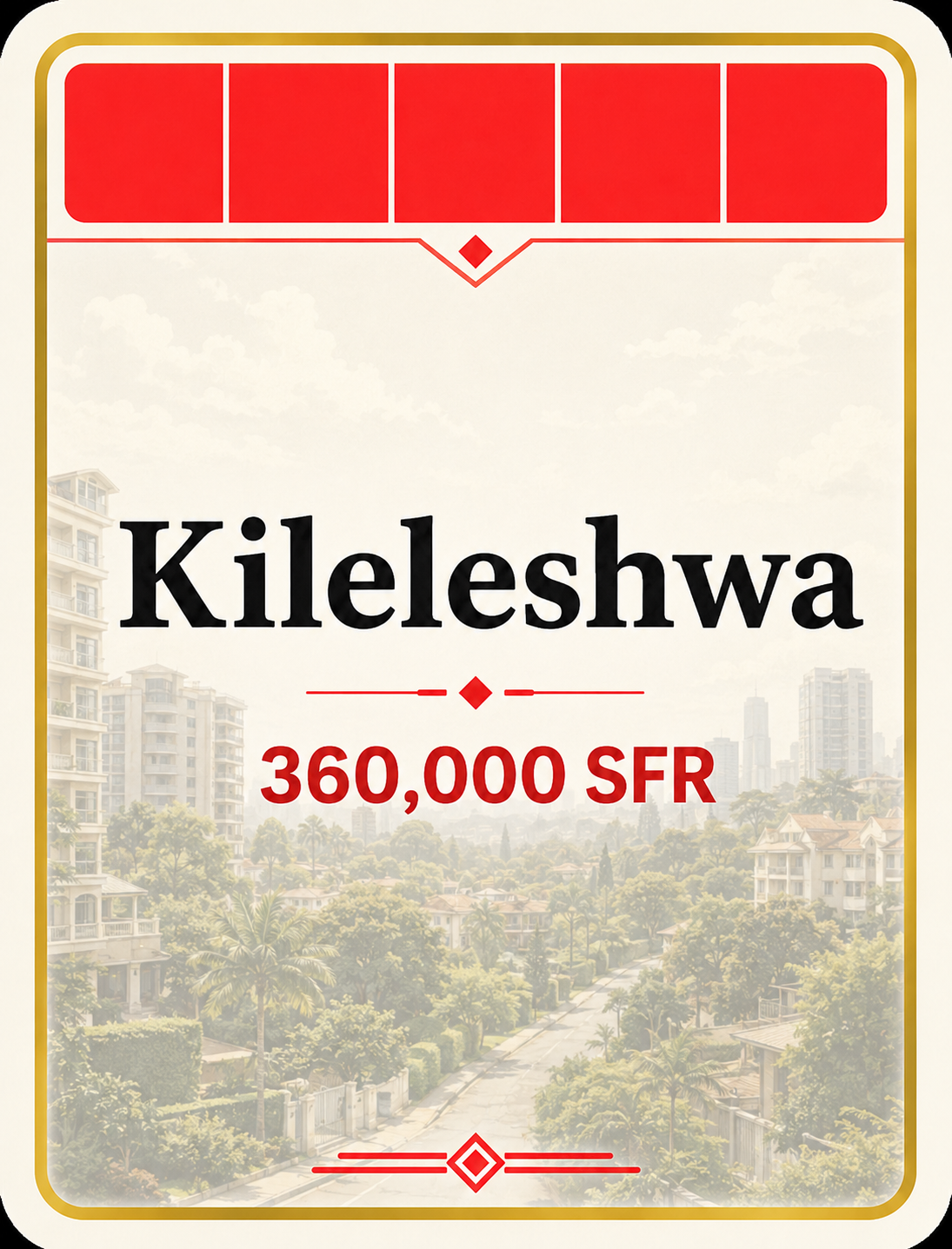 Kileleshwa Base fee: 21,600 SFR Mortgage: 162,000 SFR Unit cost: 234,000 SFR | 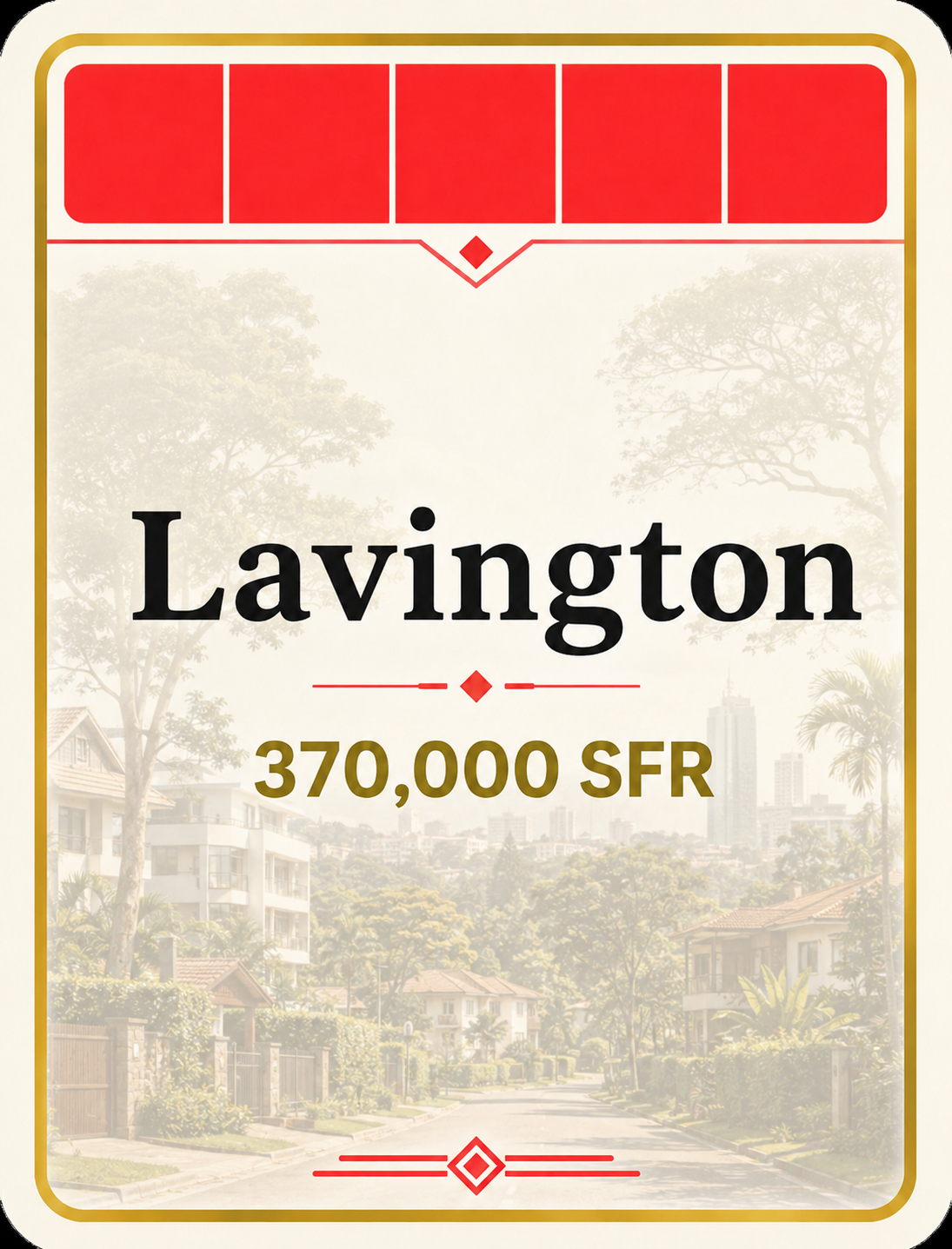 Lavington Base fee: 22,200 SFR Mortgage: 166,500 SFR Unit cost: 240,500 SFR | |
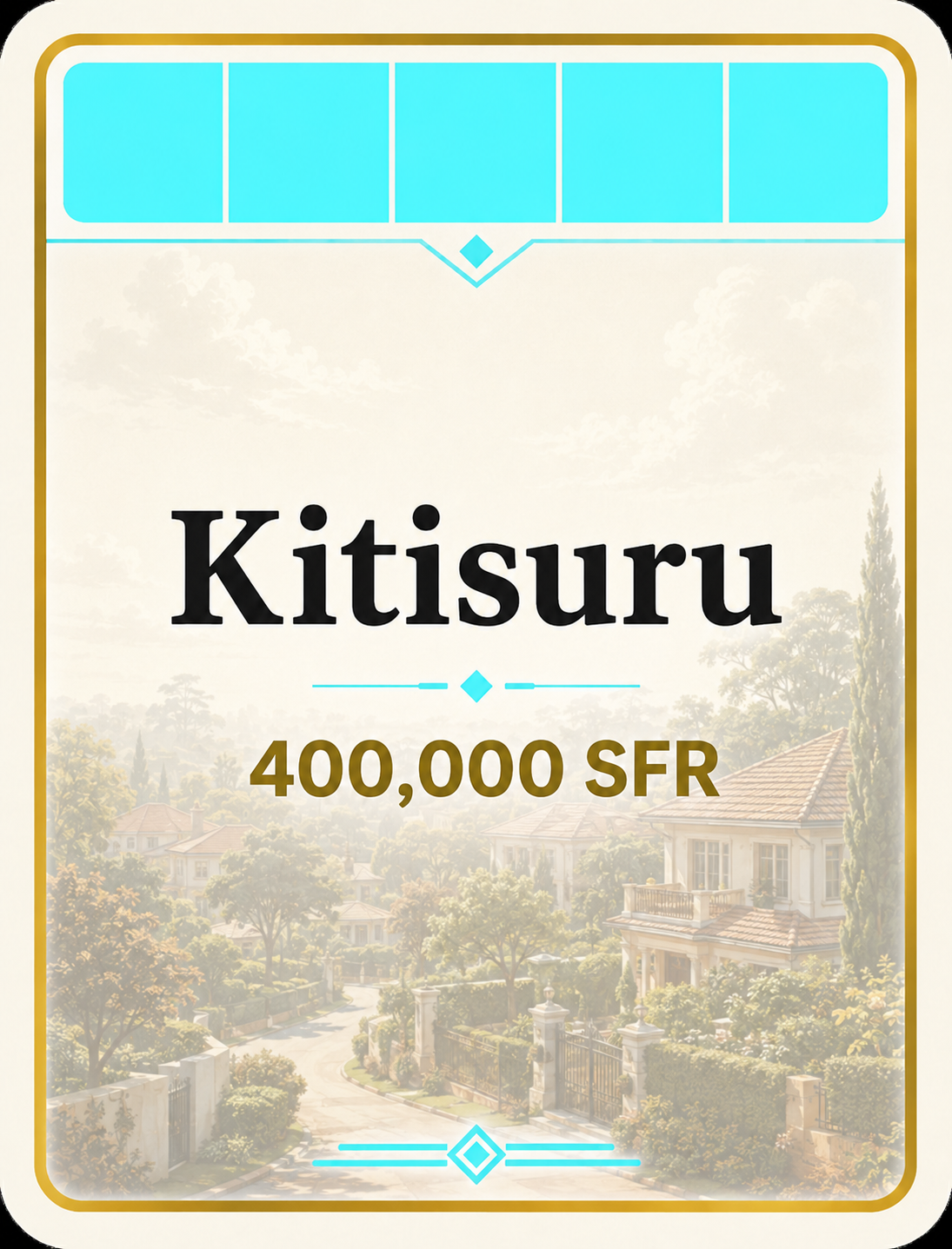 Kitisuru Base fee: 24,000 SFR Mortgage: 180,000 SFR Unit cost: 260,000 SFR | 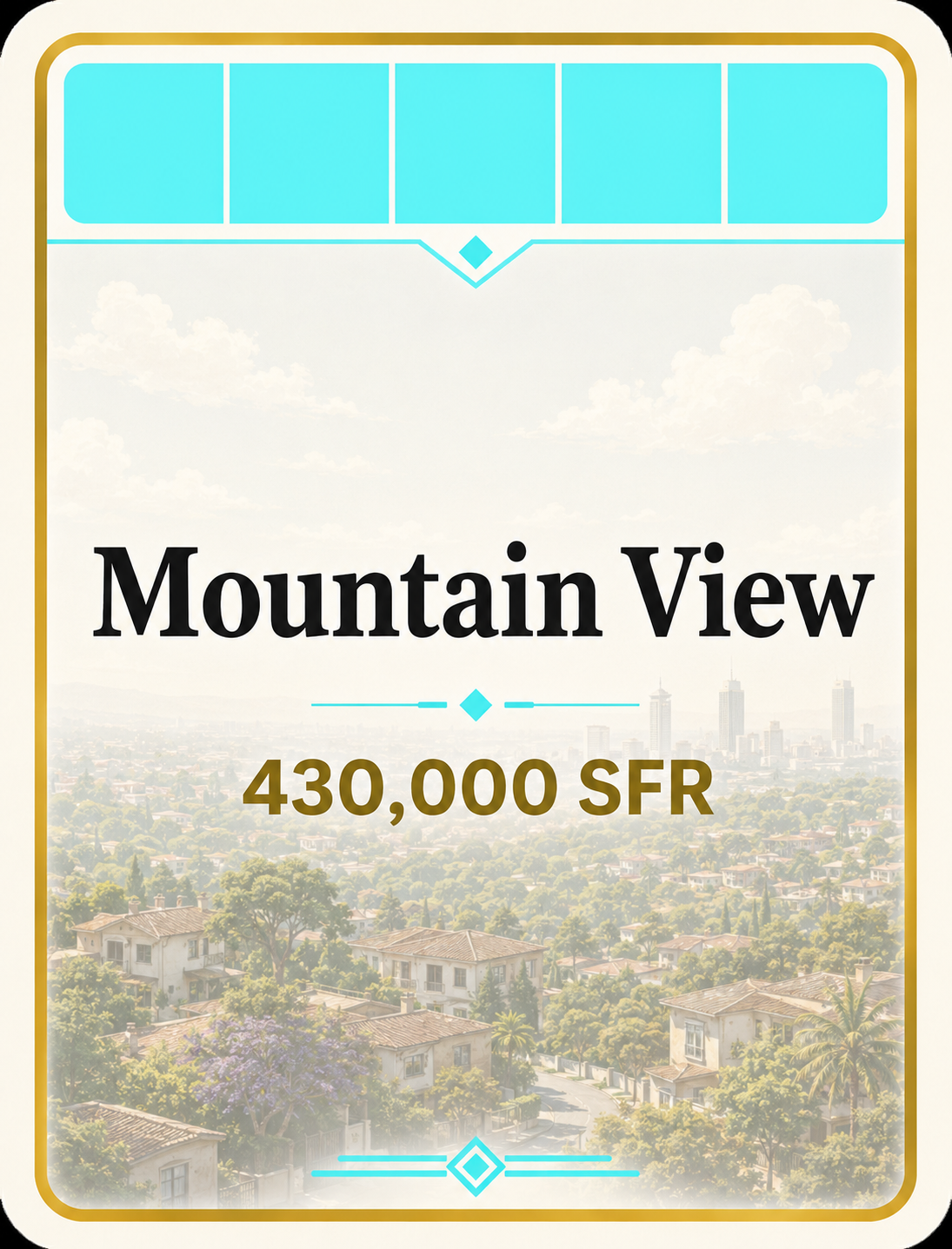 Mountain View Base fee: 25,800 SFR Mortgage: 193,500 SFR Unit cost: 279,500 SFR | 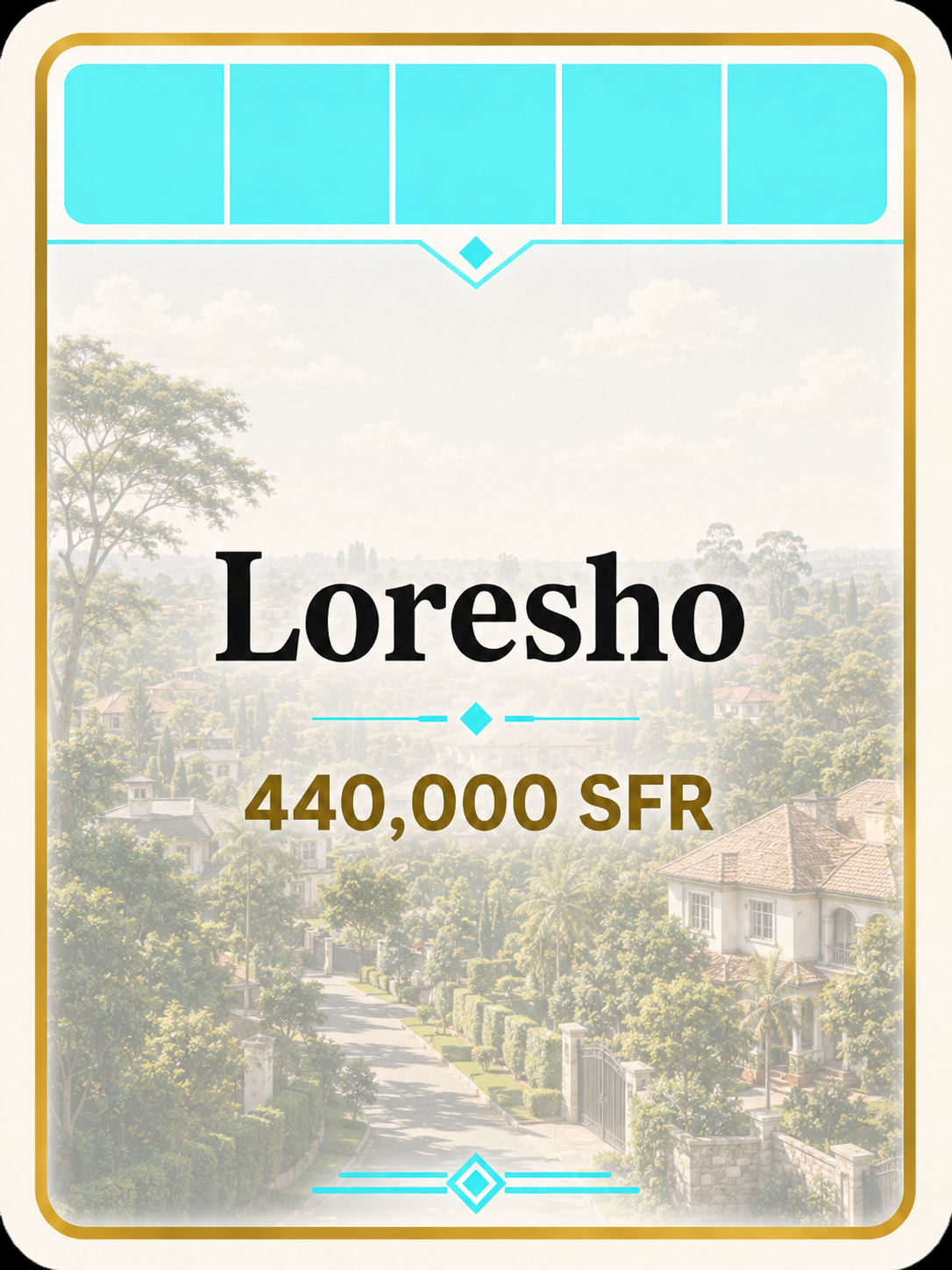 Loresho Base fee: 30,800 SFR Mortgage: 220,000 SFR Unit cost: 308,000 SFR | 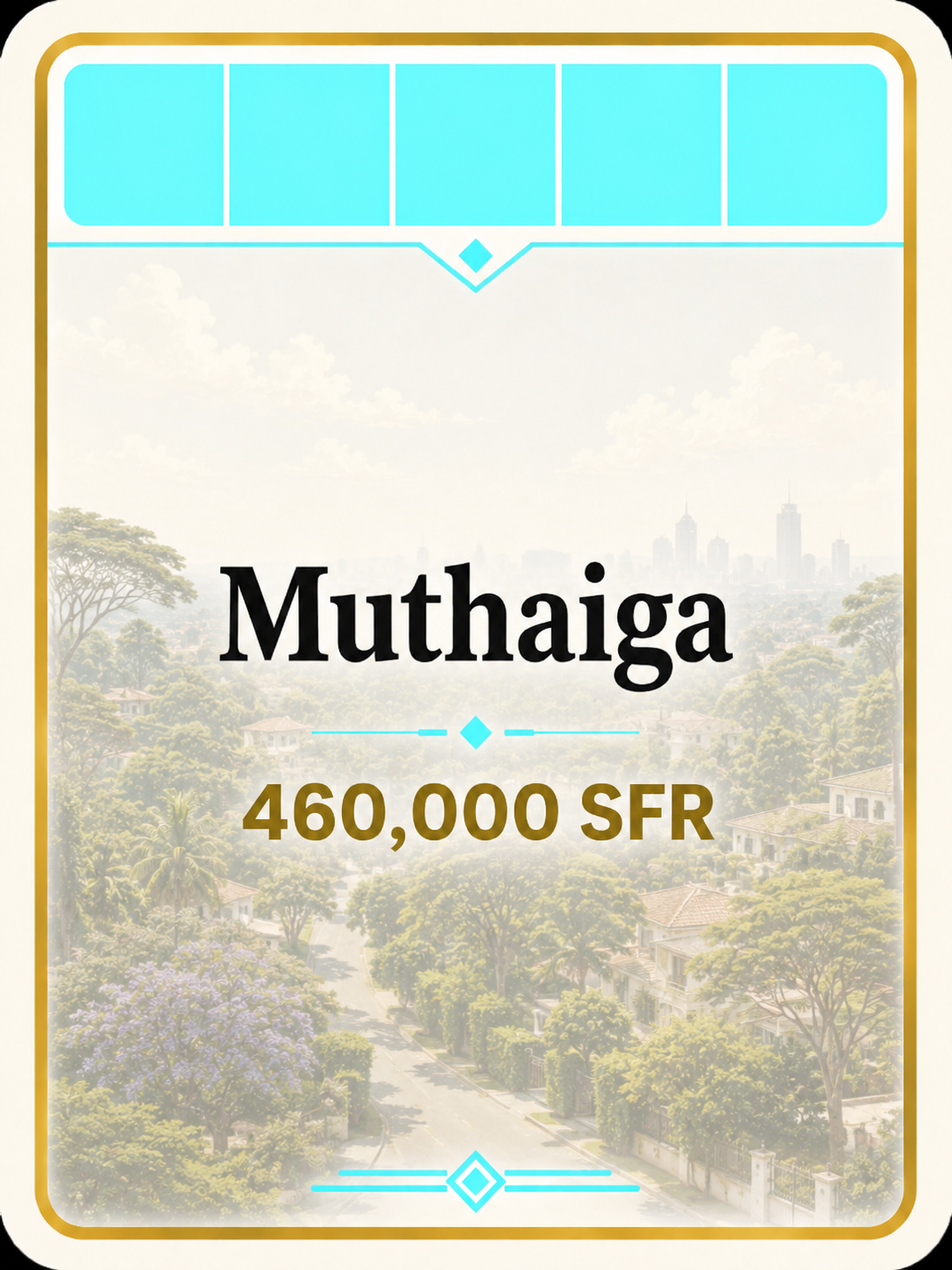 Muthaiga Base fee: 32,200 SFR Mortgage: 230,000 SFR Unit cost: 322,000 SFR |
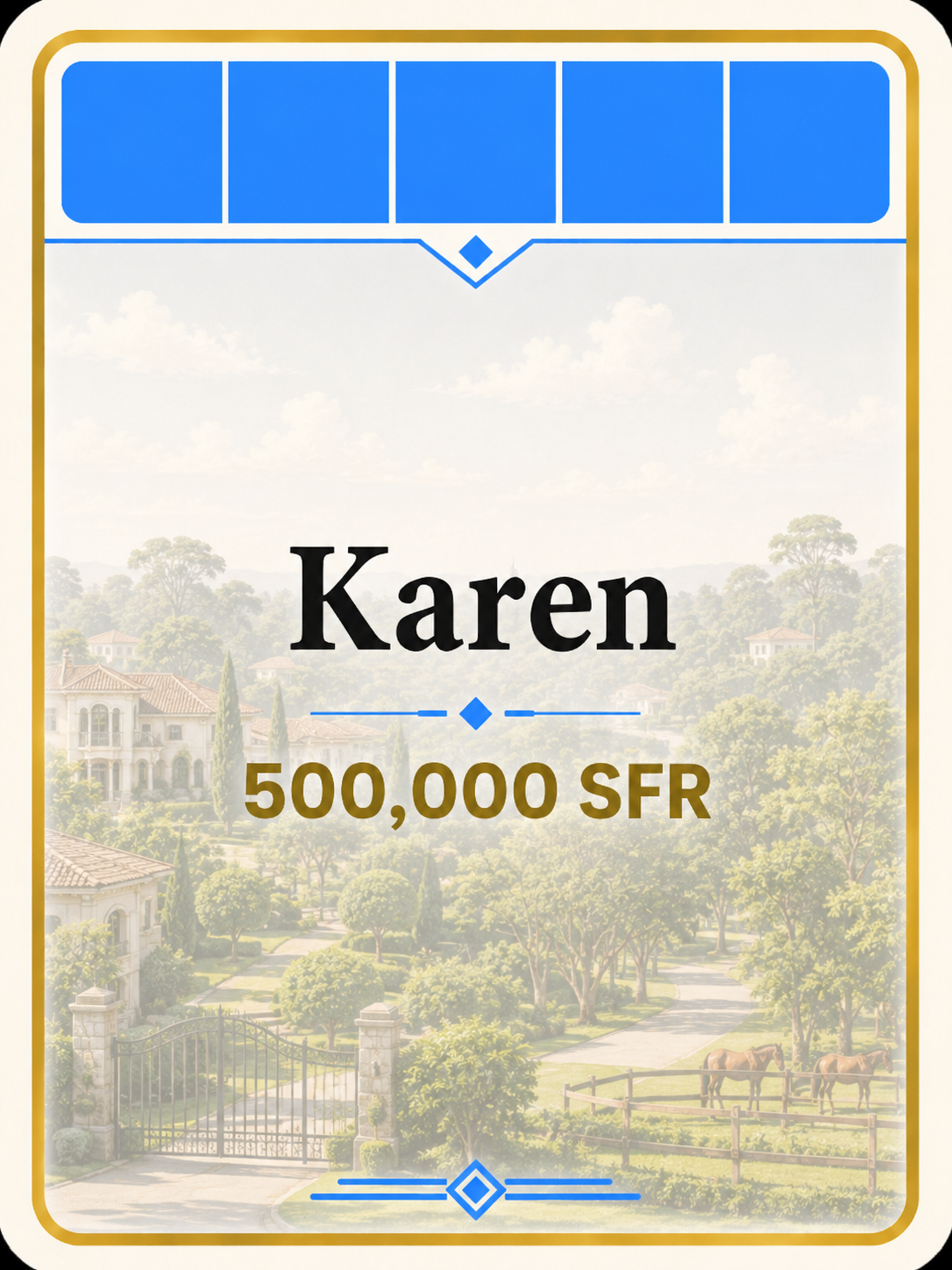 Karen Base fee: 40,000 SFR Mortgage: 250,000 SFR Unit cost: 350,000 SFR | 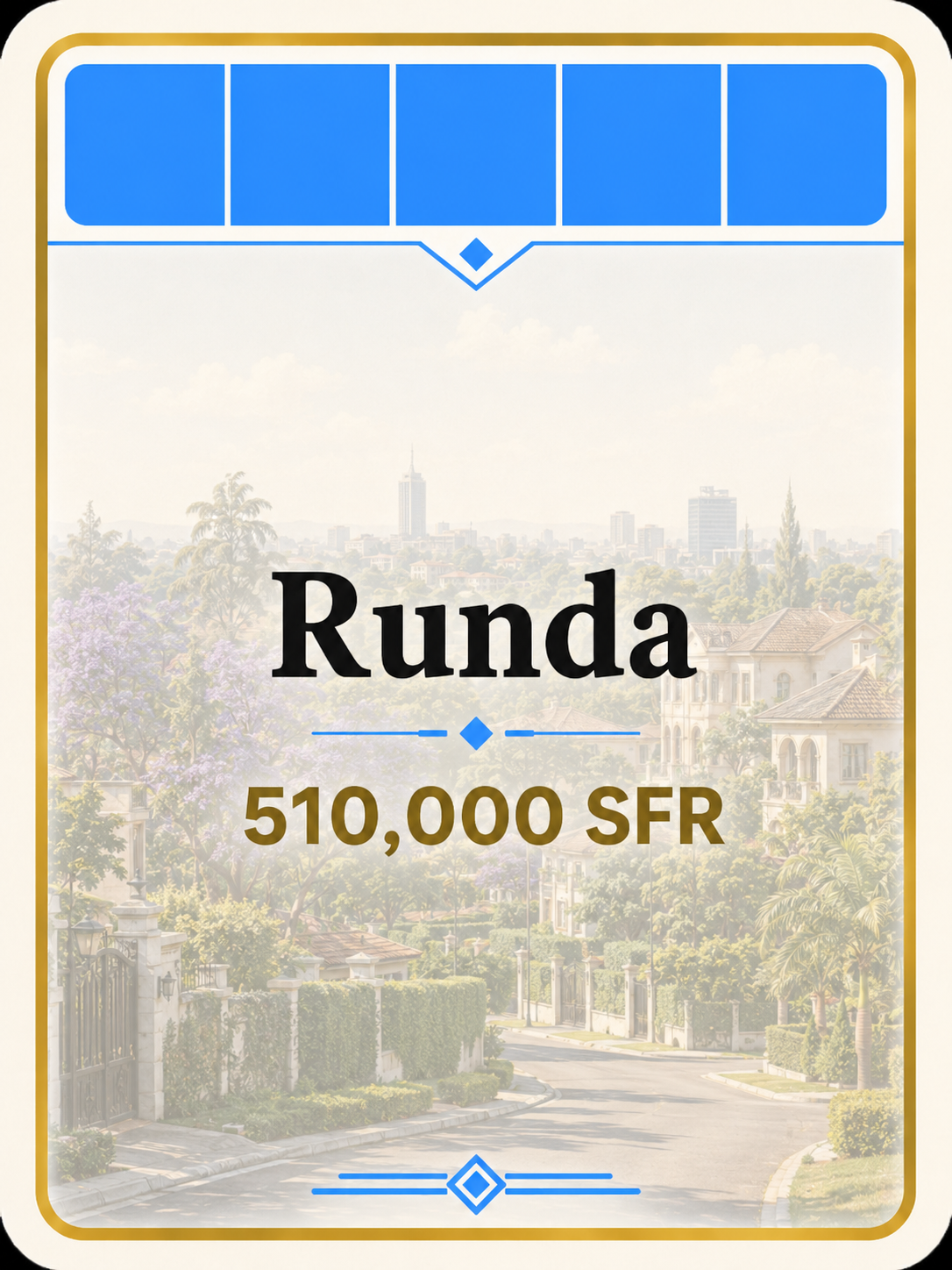 Runda Base fee: 40,800 SFR Mortgage: 255,000 SFR Unit cost: 357,000 SFR |
Fast Food
Restaurant chains that charge meal bills and scale with shop development.
 Sonford Base fee: 5,600 SFR Mortgage: 56,000 SFR Unit cost: 49,000 SFR |  Pizza Inn Base fee: 12,600 SFR Mortgage: 84,000 SFR Unit cost: 84,000 SFR |
 Galitos Base fee: 15,000 SFR Mortgage: 100,000 SFR Unit cost: 112,500 SFR |  KFC Base fee: 21,000 SFR Mortgage: 120,000 SFR Unit cost: 165,000 SFR |
Transport
Route-based properties that grow stronger as you expand the network.
 Citi Hoppa Base fee: 2,500 SFR Mortgage: 100,000 SFR Unit cost: 75,000 SFR |  Mash East Africa Base fee: 11,100 SFR Mortgage: 148,000 SFR Unit cost: 129,499 SFR |
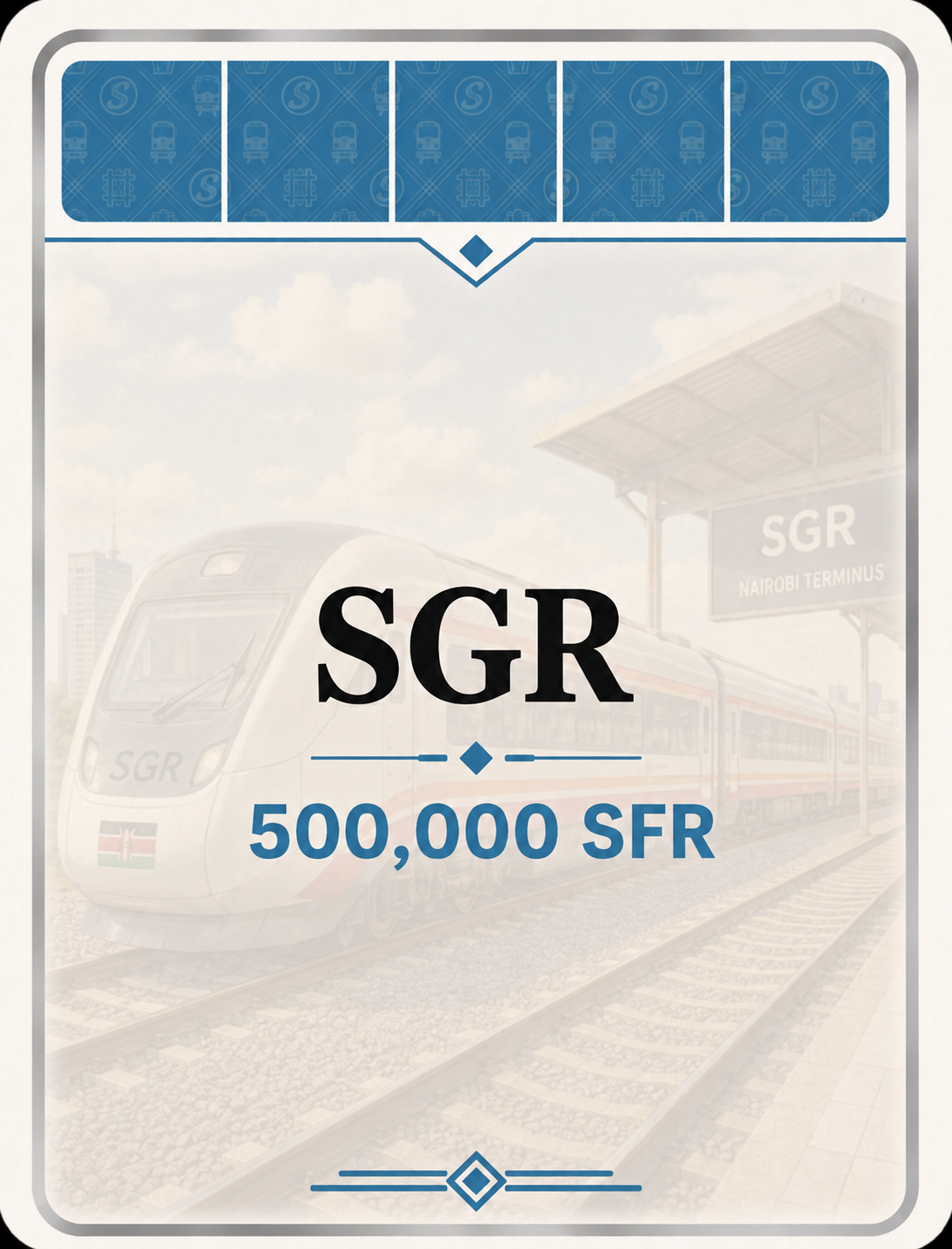 SGR Base fee: 25,000 SFR Mortgage: 200,000 SFR Unit cost: 250,000 SFR | 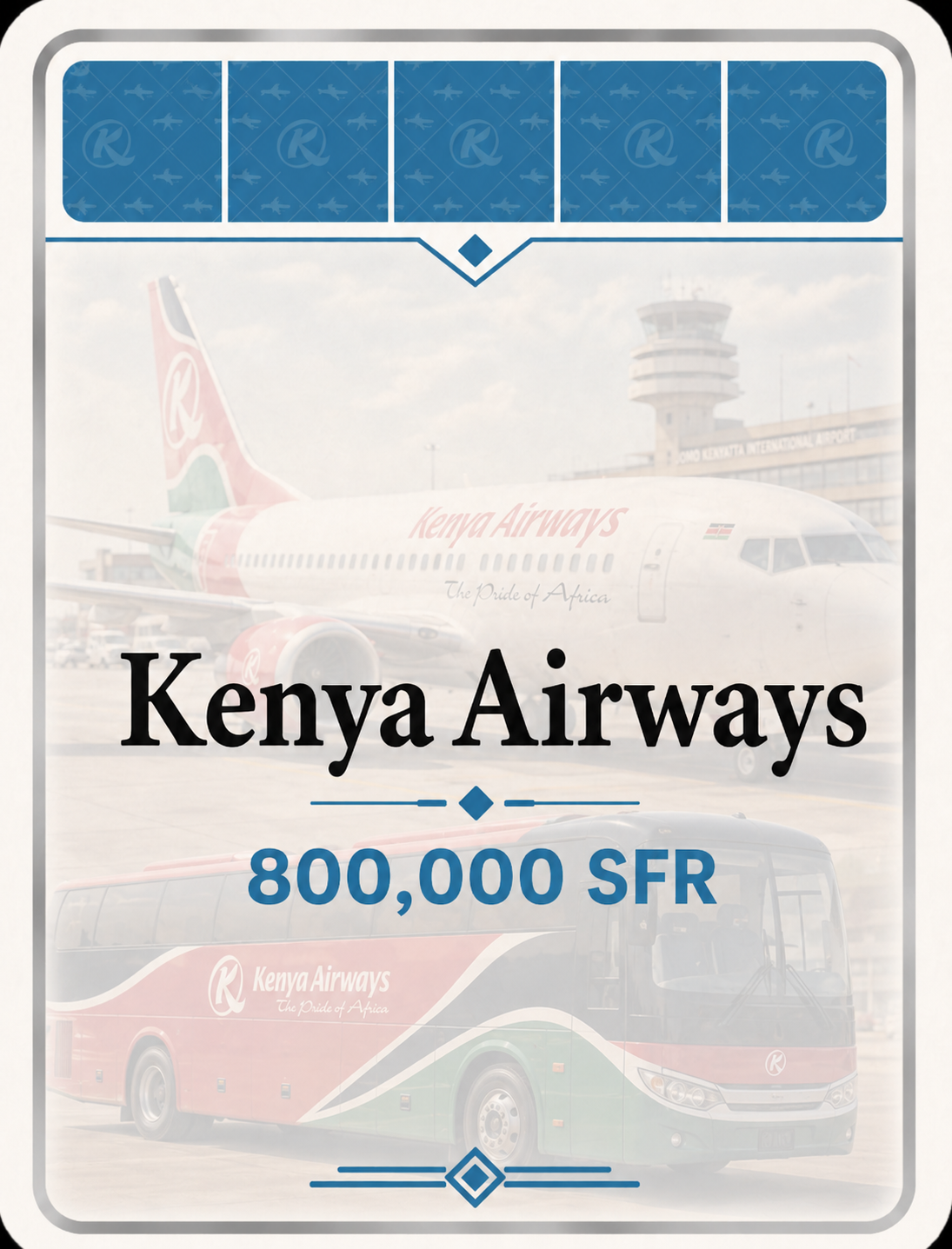 Kenya Airways Base fee: 56,000 SFR Mortgage: 320,000 SFR Unit cost: 520,000 SFR |
Utilities
Infrastructure properties that develop with stations and steady bill income.
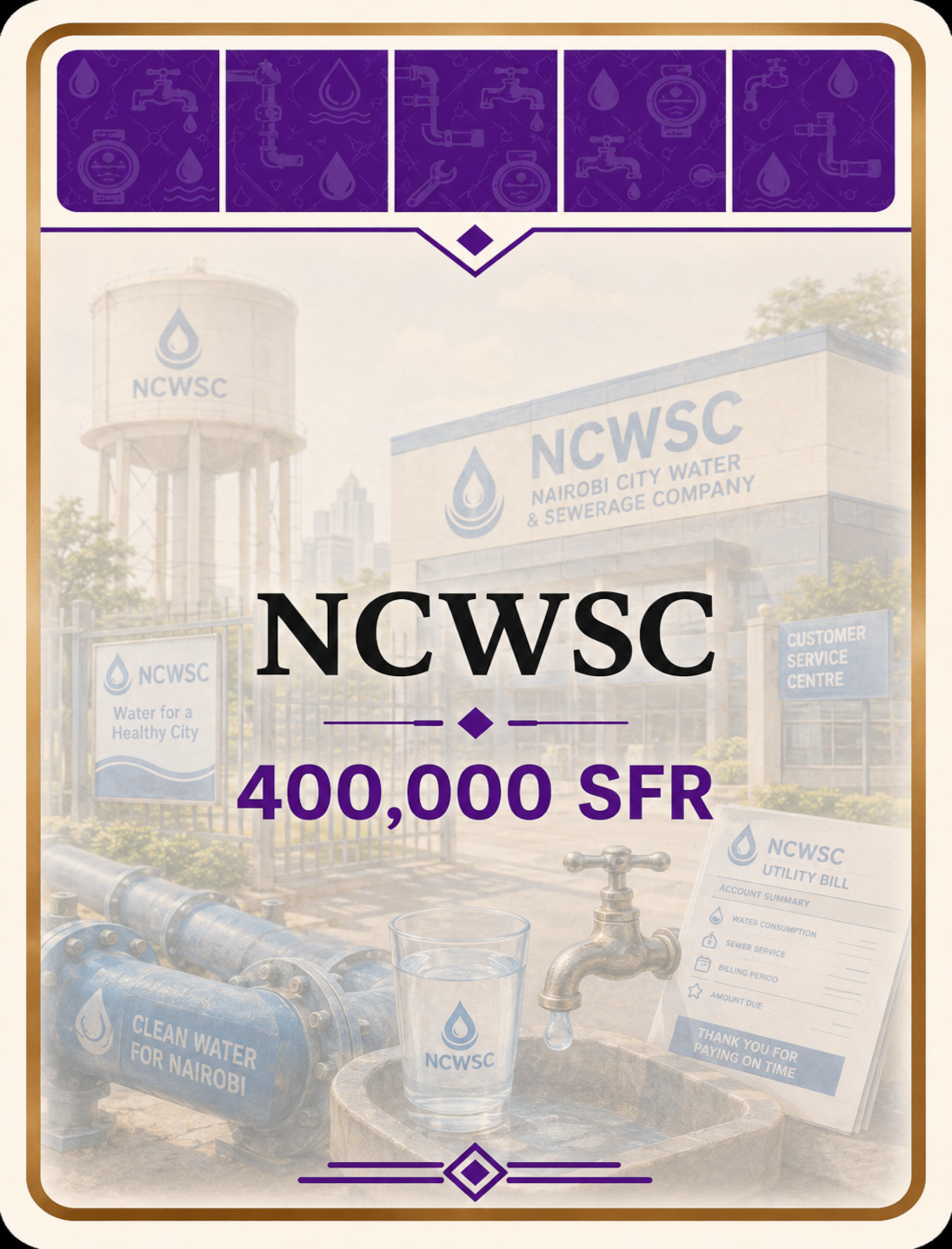 NCWSC Base fee: 4,000 SFR Mortgage: 160,000 SFR Unit cost: 140,000 SFR | 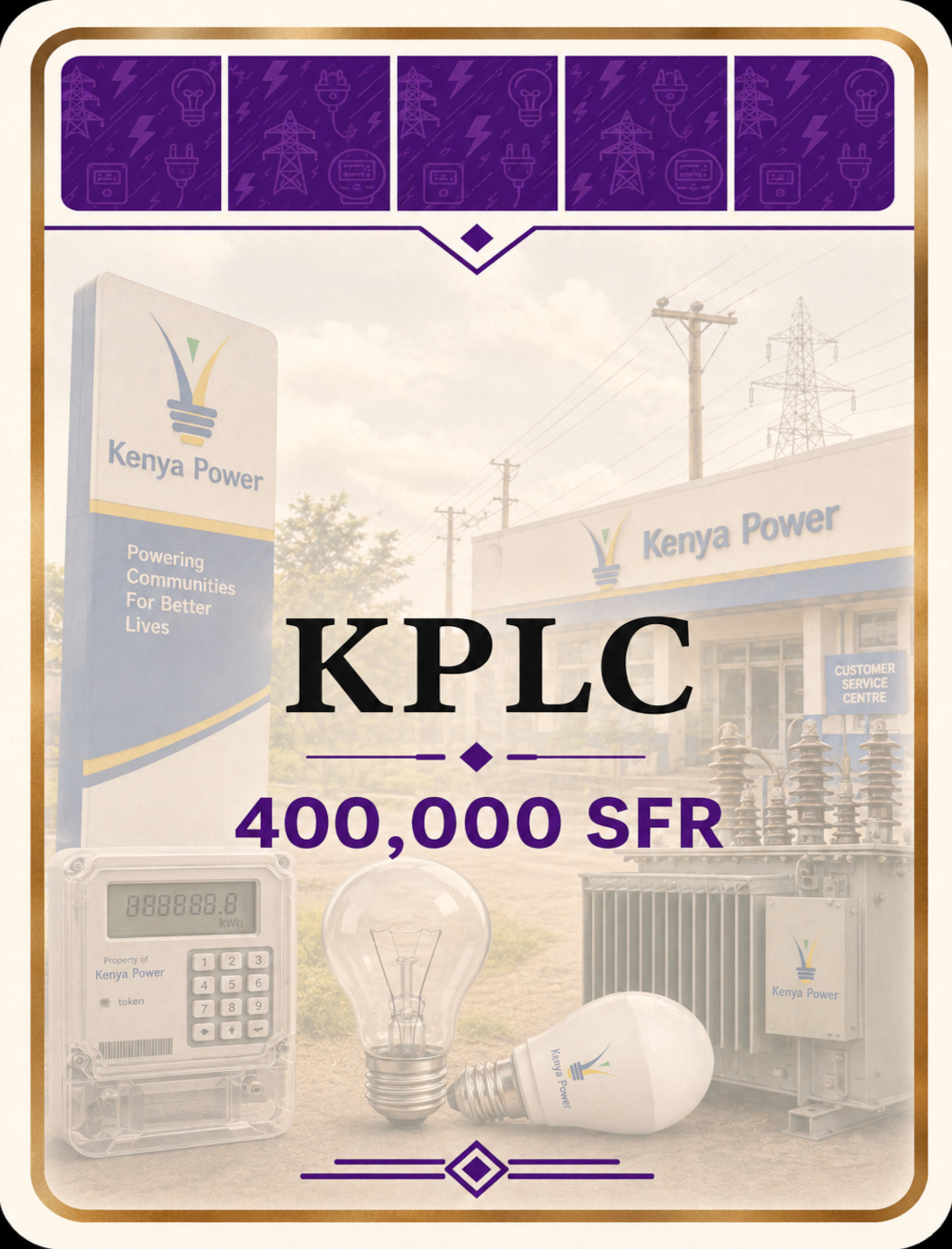 KPLC Base fee: 8,000 SFR Mortgage: 160,000 SFR Unit cost: 180,000 SFR |
Comms
Communications companies that expand with satellites and collect charges from visitors.
 Faiba Base fee: 3,900 SFR Mortgage: 156,000 SFR Unit cost: 136,500 SFR |  Safaricom Base fee: 5,000 SFR Mortgage: 200,000 SFR Unit cost: 225,000 SFR |
Cards and Events
Mtaani Cards
Mtaani cards are the money-and-chaos popup cards of the game. They usually change cash, debt, taxes, jackpots, or other personal financial pressure the moment you draw them.
Think of them as short financial shocks: some reward you immediately, while others demand payment or force a rapid change of plan.
Mtaani card amounts up to 1,200,000 SFR are always paid at face value. Larger amounts are scaled down early in the game: during the opening revolutions (the first 8 revolutions with 2 players, 6 with 3 players, and 4 with 4 players) they pay only 45% of the printed value. After that early phase they use their full value, and from revolution 10 large Mtaani cards gain another 25 percentage points every ten revolutions: 125% at revolution 10, 150% at revolution 20, 175% at revolution 30, and so on. During play, the game only shows the final SFR amount on the card when it is drawn.
 Mtaani Cards Example 1 Your MansaX deposit gets doubled. Gain 1,100,000 SFR |
Mtaani Cards Example 2 Amazing year for your maize farm - Collect 2,000,000 SFR from NCPB |
Mathree Cards
Mathree cards are movement popup cards. They send you to a named destination, pull you into jail, or rush you toward a specific opportunity on the board.
Because they move your token directly, they can set up a buy, force a fee, or interrupt a careful route around the board.
 Mathree Cards Example 1 Your presenter friend throws a bash. Take a mat to Lavington. |
Mathree Cards Example 2 Case of mistaken identity near the police station. Go to Jail. |
Insurance Cards
Insurance cards are always on sale in the asset manager, with the first costing 1,000,000 SFR. Every time an insurance card is bought, the price doubles.
They can be traded between players like any other asset, but they are only spent when a player chooses to cover a mandatory payment they cannot otherwise pay in cash.
 Insurance Cards The first card costs 1,000,000 SFR, and every purchase doubles the next global purchase price right away. |
- The insurance cards available are one more than the number of players, and the maximum cards a player can hold is the same as the number of players.
- Using the card is optional when a mandatory payment is active.
- Once used, the card returns to the shared pool and is available for any player to buy.
Special Cards
Four one-of-a-kind cards are bought at specific tiles and held in your Purchased cards panel until you play them. Teleport and Zoning are on sale from the start; the Injunction opens up from the 8th revolution and the Syndicate from the 15th.
 Teleport 2,000,000 SFR. Jump from a property you own to another you own; salary is paid if the hop passes Payday. |
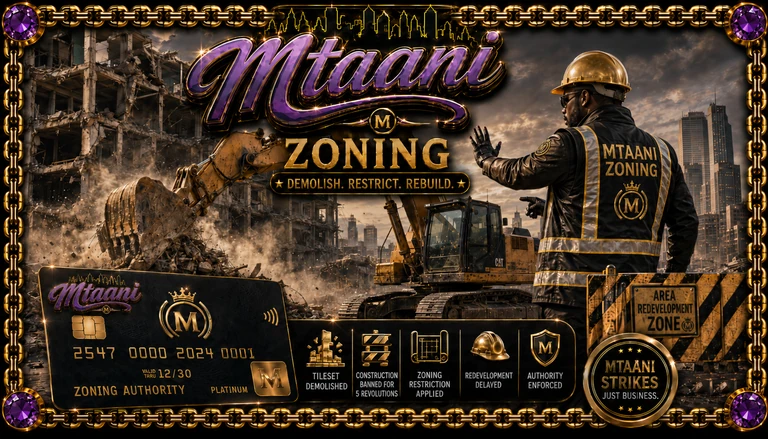 Zoning 5,000,000 SFR. Demolish every unit on one tileset (any owner, no refund) and ban building there for 5 revolutions. |
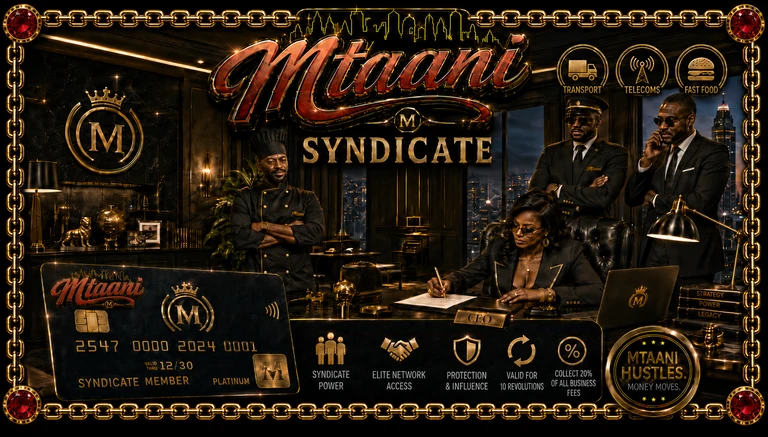 Syndicate 9,000,000 SFR. Skim 20% of fast-food, transport, and comms rent for 10 revolutions. |
 Injunction 6,000,000 SFR. Shield one owned tileset from Zoning and Syndicate for 7 revolutions. Play it before a hostile action. |
Global Events
Global events do not belong to one player. They temporarily change the rules for the whole table, usually for one or more revolutions.
A new global event can begin only after the previous one has ended, and at the earliest three revolutions after the last one started. Instant events (bonuses, penalties, amnesties) resolve immediately, while timed events last for the number of revolutions stated on the event.
Every global event in this edition:
- The government declares a tax amnesty, taxes are forgiven for the next 1 revolution.
- A recession hits the city, salaries are cut by 20% for the next 2 revolutions.
- The city hosts the Olympic Games, rental income is tripled for the next 1 revolution.
- A new tech hub opens in the city, property values increase by 10% for the next 2 revolutions.
- A major crime wave hits the city, property values decrease by 20% for the next 1 revolution.
- A liberal governor is elected, rent is subsidized by 20% for the next 2 revolutions.
- A major scandal hits property owners, everyone goes to jail for 2 turns.
- The country strikes oil, everyone receives a one-time bonus of 600,000 SFR.
- Austerity measures are implemented, everyone loses 10% of their cash.
- A general amnesty is declared, everyone gets out of jail immediately.
- A bank run sweeps the city and the bank immediately calls in every outstanding ATM loan.
- A post-recession coalition takes office and resets the price of insurance cards to the base rate.
About This Edition
The Nairobi Edition is set in Nairobi, using local names and art. The mechanics shown here stay in sync with the currently selected board edition.